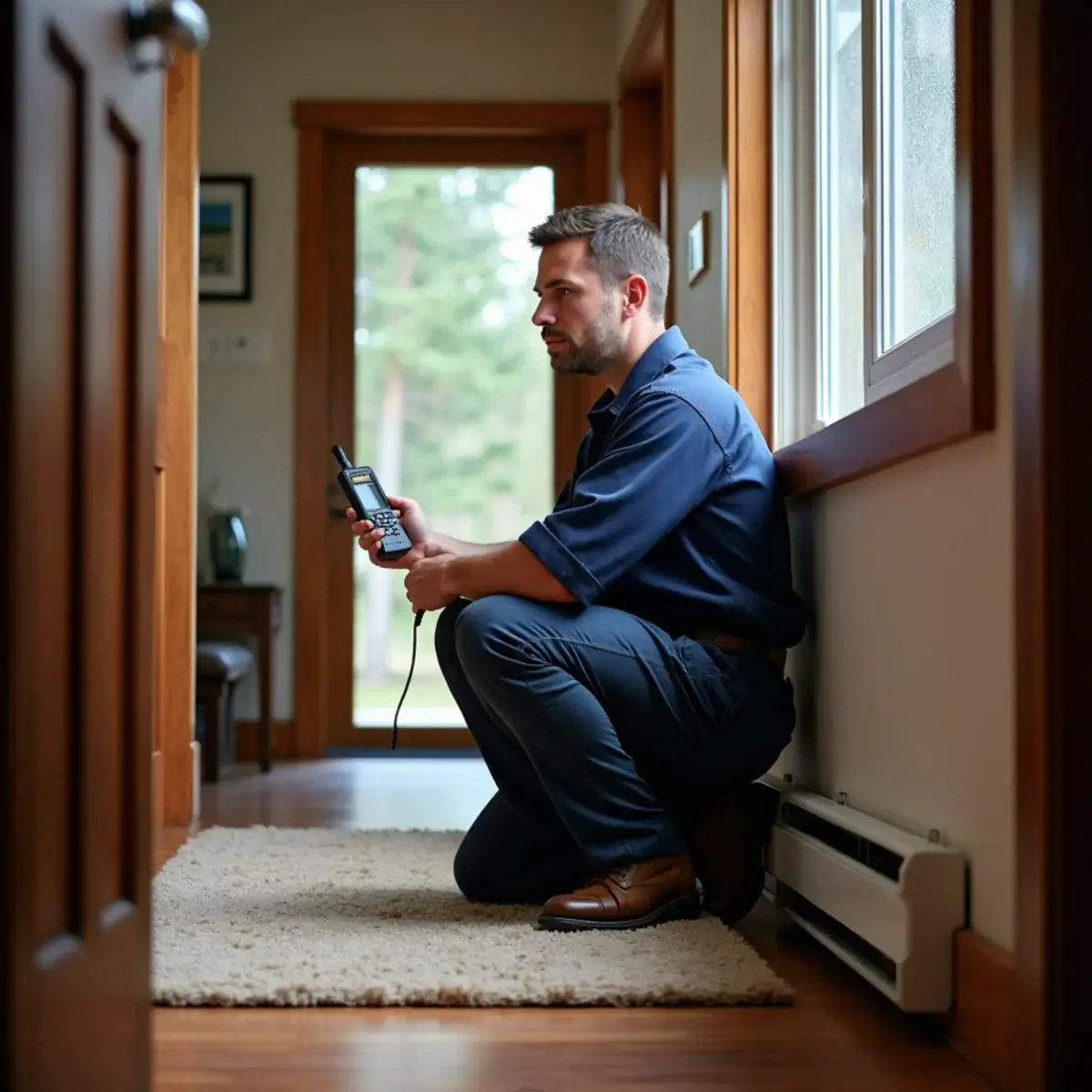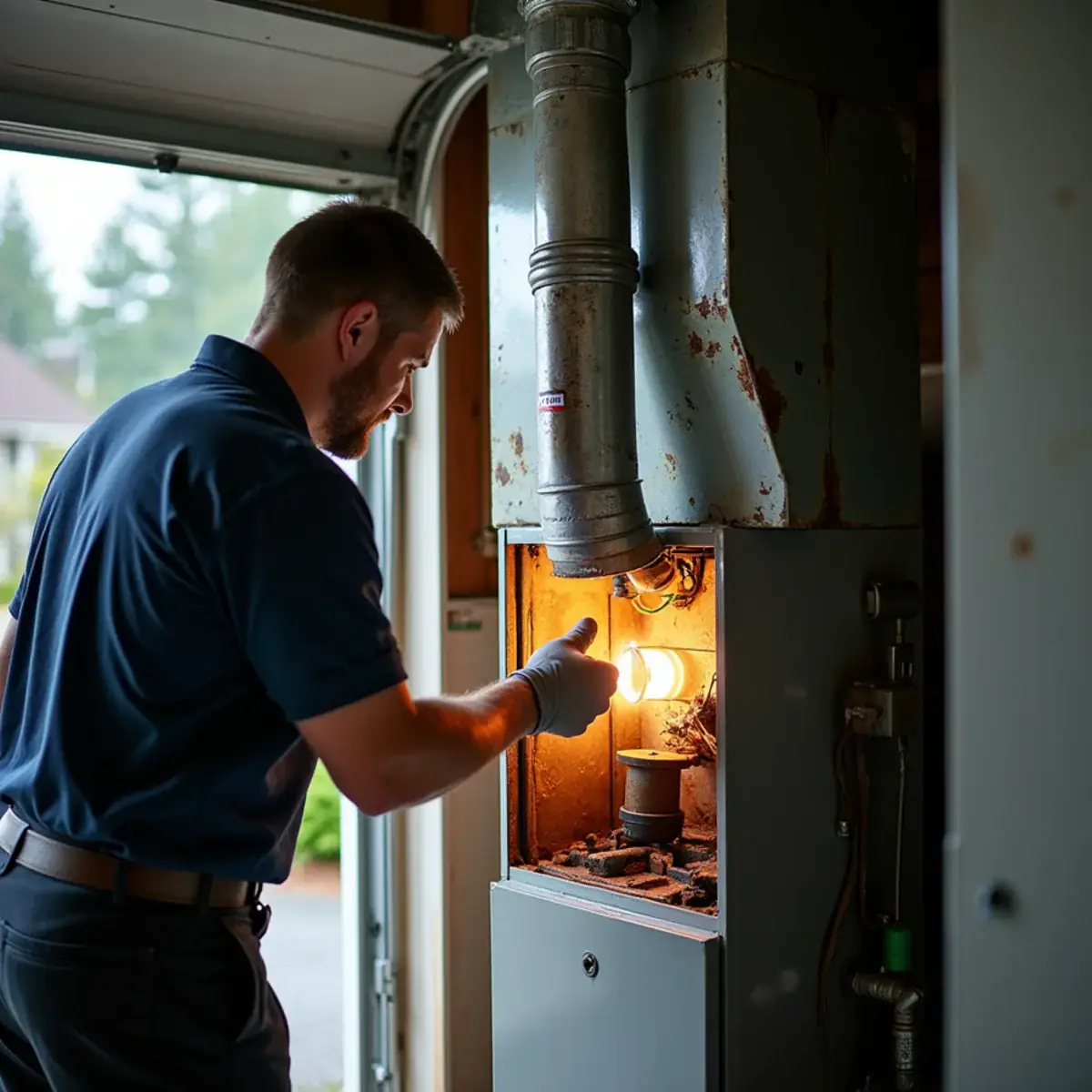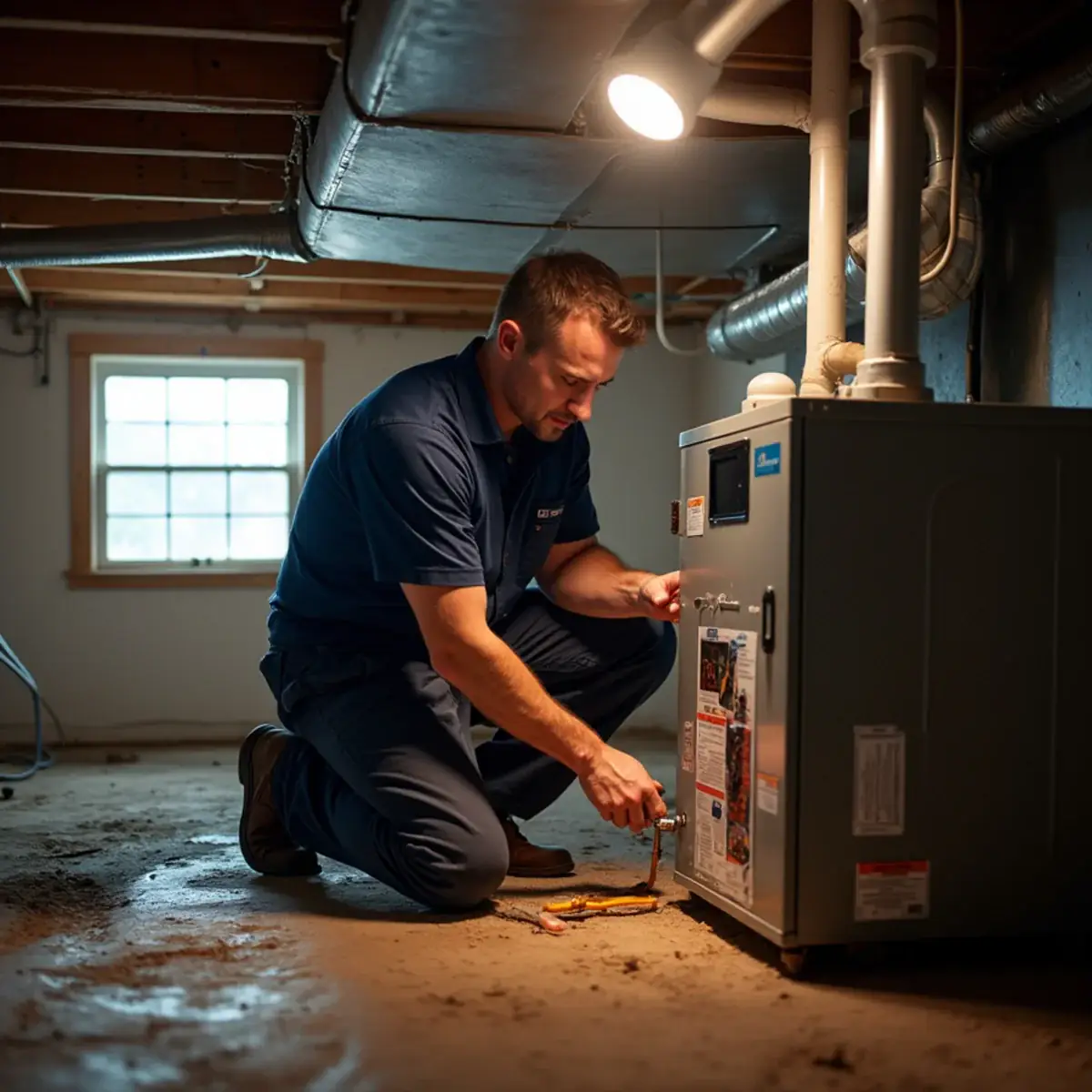
A furnace that won’t light, keeps shutting off or blows cold air almost always has a findable reason. Our furnace repair in Bremerton, WA approach is simple: test before replacing, fix the root cause, and tell you honestly when a repair no longer makes financial sense.
Kitsap furnaces live hard lives. Many sit in damp crawl spaces or unheated garages, where moisture corrodes burners, flame sensors and wiring. Others are 25-year-old units in Navy-era homes near the shipyard, still running on original blowers.
If your furnace is running but the air feels cool, start with our guide to why a furnace blows cold air. Many causes are quick to check yourself.
Reviewed · regional price ranges and rebate details are rechecked at each update.
Common furnace problems we fix
These are the furnace failures we diagnose most often across Kitsap:
Blows cold air
Often a dirty flame sensor, failed igniter, clogged condensate trap or the fan set to ON instead of AUTO.
Won’t ignite
Cracked hot surface igniters are the most common cause, followed by pressure switch and gas valve faults.
Short cycles or shuts off early
Usually an overheating furnace tripping its limit switch because of a clogged filter or restricted ducts.
Loud or failing blower
Squeals, rattles and hums often mean a worn motor, bad capacitor or loose blower wheel.
Error codes flashing
The control board’s code points us in the right direction, but we confirm with testing.
What’s included in a furnace repair visit
You’re paying for an answer you can check. A furnace repair visit with us includes:
Gas and CO safety readings first
A leak check on the gas connector and valve, and CO readings at the flue and supply air, before any troubleshooting starts.
Fault history pulled from the board
We read the stored error codes and blink pattern, so an intermittent lockout that cleared itself still leaves a trail.
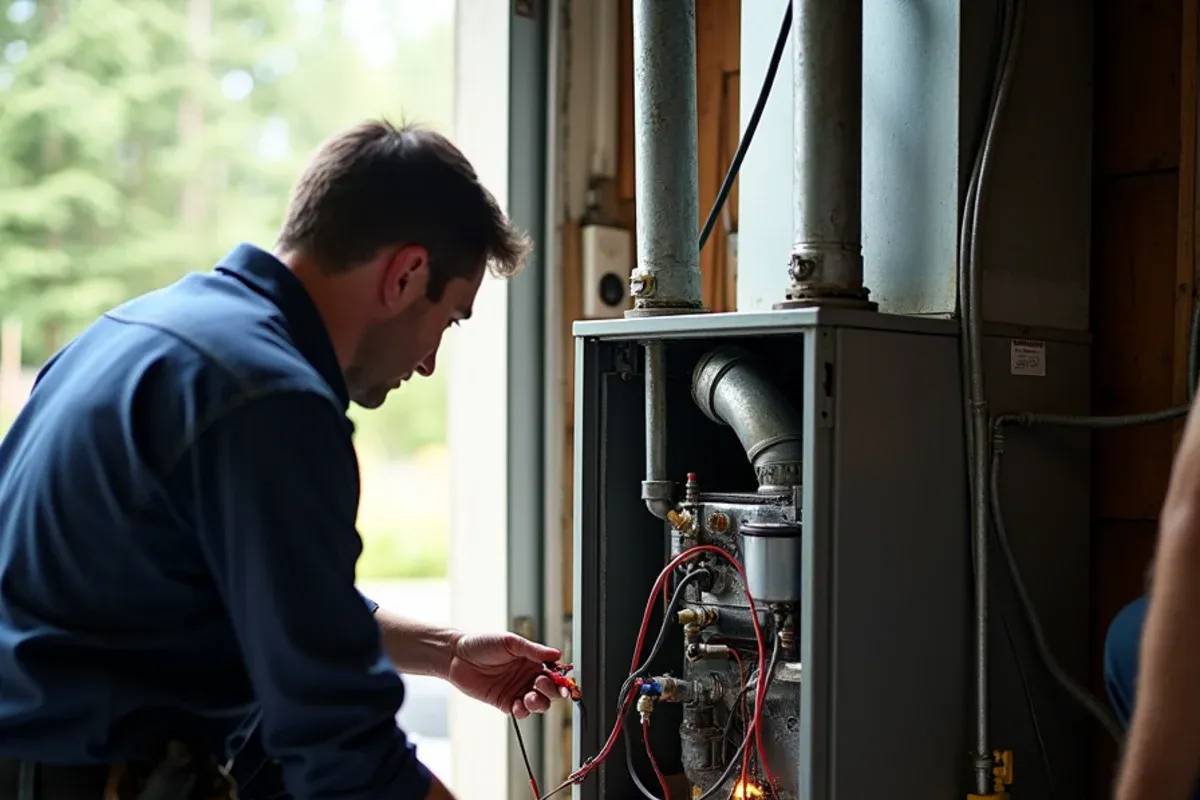
Measured component tests
Igniter resistance, flame signal in microamps, pressure switch readings in inches of water column and blower capacitor values, written down.
The repair itself, priced first
Once you approve the line-item quote, the failed part is replaced with one matched to your model.
Gas pressure and temperature rise set to spec
After the fix we check manifold pressure and confirm the temperature rise sits inside the range printed on the furnace nameplate.
Your old part and the photos
You can keep the failed part, and the photos and readings go on the invoice with a note on anything else near the end of its life.
How we diagnose and repair your furnace
Good furnace repair is methodical:
- 1
Listen to the history
When the problem started, what it sounds like and any error codes you’ve seen.
- 2
Safety check
We test for gas leaks and CO and inspect the heat exchanger before anything else.
- 3
Sequence of operation
Watching the furnace run through its startup reveals exactly where it fails.
- 4
Component testing
Meters confirm which part failed, instead of guessing and replacing parts.
- 5
Upfront quote
You approve the repair and price before we start work.
- 6
Repair and verify
After the fix, we run a full heat cycle and check temperature rise and safety controls.
What affects the cost of a furnace repair
Published furnace repair costs in the Bremerton area range roughly $150–$700 for most common repairs. Where yours lands depends on:
- The failed part
- Flame sensors and igniters are inexpensive; inducer motors, control boards and gas valves cost more.
- Furnace age and brand
- Older or less common units can have harder-to-find parts.
- Access
- Crawl space and attic units take more time than a garage or closet furnace.
- Timing
- After-hours and weekend calls generally cost more.
- Underlying causes
- A limit switch trip caused by bad ductwork may need more than a part swap.
These are regional planning ranges, not our prices. You’ll get a firm quote after diagnosis, and a final price always requires seeing the furnace in person.
When furnace repair in Bremerton, WA stops making sense
We’ll repair a furnace as long as it’s safe and cost-effective. A useful rule: if the repair costs more than a third of a new furnace and the unit is past 15 to 20 years, start comparing. A cracked heat exchanger on an older furnace is usually the end of the road.
Our guide to deciding whether to repair or replace a furnace breaks down the numbers. If replacement is the right call, our furnace installation page explains the process. Owners in Silverdale, Navy Yard City and East Port Orchard often face this choice with original equipment.
Cracked heat exchangers and carbon monoxide
The heat exchanger separates combustion gases from the air you breathe. When it cracks, CO can enter the house. Every repair visit includes a visual inspection, and we explain what we see with photos when possible. If we find a crack, we shut the furnace off and tag it, because running it isn’t safe.
Every home with gas appliances should have working CO detectors on each level. If yours ever alarms, get outside and call 911 before anything else. If the furnace has completely quit on a freezing night, our emergency HVAC repair and no heat repair services are the fastest route back to heat.
A gas smell is a different emergency, and the order matters. Don’t reset the furnace, touch the thermostat or flip lights. Get everyone out, then call 911 or Cascade Natural Gas’s emergency line from outside; Cascade supplies natural gas across most of Kitsap County, while PSE supplies the electricity. Our guide on what to do when you smell gas near a furnace covers the next steps once the utility clears the house.
Heat exchanger, venting and AFUE: three checks behind a furnace replacement call
The one-third rule is a starting point. On a Bremerton furnace, these three specifics usually settle the decision.
Is the heat exchanger actually cracked?
Ask to see the evidence: a photo or camera image of the crack, rust-through or separated seam, plus the CO reading taken in the supply air and flue. Discoloration or surface rust alone doesn’t prove a failure. If the evidence is thin, a second opinion is reasonable, and the furnace stays off in the meantime.
Does the venting still suit the furnace?
Older 80% AFUE furnaces in Manette and East Bremerton often share a chimney or metal flue with a gas water heater. Moving to a 90%-plus condensing furnace means PVC venting and a condensate drain, and the water heater left behind may need its own venting review through water heater service. Rusted flue pipe, weak draft or a corroded liner all change the math.
What efficiency are you paying to keep?
A new inducer motor or control board on a low-efficiency furnace from the 1980s buys time, not efficiency. The same repair on a condensing unit with a clean heat exchanger and sound venting is usually a good bet.
Why Bremerton homeowners choose us for furnace repair
Most furnace failures are cheap parts. The expensive mistakes are guesses. Our approach is built to avoid them:
Proof before parts
A weak flame sensor shows up as a low microamp reading, and a cracked igniter as open resistance. You see the number before you pay for the part.
Line-item quotes
Diagnosis, part and labor are listed separately, so you can compare the repair with a furnace replacement estimate on equal terms.
Straight talk on repair or replace
We say so when a repair is money well spent, and we say so when it isn’t, with heat exchanger photos rather than a sales pitch.
Gas piping in the same trade
Sticky gas valves, leaking flex connectors and undersized supply lines are handled by the same team, and bigger fixes go to our gas line work without a second contractor.
FAQ
Furnace Repair questions from Bremerton homeowners
Why is my furnace blowing cold air?
The most common causes are a thermostat fan set to ON, a dirty flame sensor shutting down the burners, a clogged filter tripping the limit switch, or a blocked condensate drain on a high-efficiency furnace. Check the thermostat and filter first. If those are fine, a technician can find the cause quickly.
Is it safe to keep resetting my furnace?
Not repeatedly. A furnace that locks out is protecting itself from something like overheating, poor venting or failed ignition. Resetting it once is reasonable, but if it keeps happening, the underlying cause needs diagnosis. Repeated resets on an overheating furnace can stress the heat exchanger.
How long should a furnace last in Kitsap County?
Most gas furnaces last 15 to 20 years, sometimes longer with good maintenance. Units in damp crawl spaces or garages often wear faster because moisture corrodes burners and electrical parts. Age alone isn’t a reason to replace, but combined with frequent repairs or safety issues, it tips the decision.
Do you repair electric furnaces too?
Yes. Electric furnaces are simpler than gas units but fail in their own ways: burned-out heating elements, failed sequencers, bad relays and blower motor problems. They draw a lot of current, so wiring and connections also need checking. Many homeowners also ask whether a heat pump would lower their bills, and we can explain that option too.
Should I replace my failed furnace with a heat pump instead?
It’s worth pricing both when the furnace is old and the repair is major. A heat pump adds cooling for summer heat waves and may qualify for utility incentives, but it needs enough electrical capacity, a backup-heat plan and ducts that suit its lower supply temperatures. A gas furnace keeps familiar heat and may reuse existing venting. Regional planning ranges run about $6,500–$11,000 for a gas furnace and $9,500–$13,500 for a standard heat pump, before rebates, and a site visit sets the real number.
Why does my furnace smell like burning dust when it first turns on?
A light dusty smell for the first few heating cycles each fall is normal. Dust settles on the burners and heat exchanger over summer and burns off. It should fade within a day. A sharp electrical or plastic smell, smoke, or an odor that lingers is different: shut the furnace off at the switch and call. A rotten-egg smell means gas, so leave the house first.
What should I have ready when I call about a furnace problem?
Note the blink pattern of the light on the control board, usually visible through a small window on the lower panel. Photograph the model and serial plate if you can reach it safely. Tell us when the problem started, what it sounds like, the filter size and when it was last changed, and whether the furnace is in a crawl space, attic or closet.
Furnace repair across Kitsap, Mason and Thurston
Furnaces sitting in damp crawl spaces around Erlands Point and Kitsap Lake corrode flame sensors and wiring faster than closet units. In Parkwood, the 1960s and 70s ramblers often still run electric furnaces, so sequencers and heating elements are the usual suspects.
Further out, older homes in Shelton bring aging furnaces and some oil-to-gas questions, and in Olympia, where PSE supplies the gas, many bungalows pair a furnace with a heat pump, so we test the dual-fuel handoff too.
We provide furnace repair across Bremerton and nearby communities, including:
- Furnace Repair in Kitsap County
- Furnace Repair in Port Orchard
- Furnace Repair in Silverdale
- Furnace Repair in Chico
- Furnace Repair in Erlands Point-Kitsap Lake
- Furnace Repair in Navy Yard City
- Furnace Repair in Rocky Point
- Furnace Repair in Tracyton
- Furnace Repair in Enetai
- Furnace Repair in East Port Orchard