Short answer
Repair the furnace if it’s under about 15 years old, the heat exchanger is sound and the fix is a routine part like an igniter or flame sensor. Replace it when age multiplied by repair cost tops roughly $5,000, the heat exchanger is cracked, or breakdowns keep repeating each winter.
Whether to repair or replace a furnace is rarely about one broken part. It’s about the age of the equipment, how often it’s been failing, whether it’s still safe, and what you’d spend over the next few winters either way.
We fix plenty of old furnaces, and we’ll tell you when a repair makes sense. But there’s a point where another furnace repair is money spent on equipment that’s already on its way out. Here’s how we help homeowners in Port Orchard, Gig Harbor and around the South Sound find that point.
The quick math to repair or replace a furnace
A useful rule of thumb: multiply the furnace’s age by the repair cost. If the result is more than about $5,000, replacement deserves a serious look. A $400 repair on a 10-year-old furnace scores $4,000, so fix it. The same repair on an 18-year-old unit scores $7,200, which means it’s time to at least price a replacement.
For context, the published furnace repair range in our area runs about $150–$700, while a gas furnace installed typically runs $6,500–$11,000 as a regional planning range. Those are market ranges, not our prices, and a real quote needs a site visit.
Repairs that are almost always worth doing
Some failures are routine wear items. On a furnace that’s otherwise sound, these are straightforward fixes:
- Hot surface igniters, which wear out on a regular schedule.
- Flame sensors that need cleaning or replacement.
- Blower motor capacitors, and sometimes the blower motor itself on a younger unit.
- Pressure switches, limit switches and clogged condensate traps.
- Thermostat and low-voltage wiring issues.
Red flags that point to replacement
Other findings change the conversation, especially on a furnace past 15 years:
A cracked or failing heat exchanger
The heat exchanger separates combustion gases from the air you breathe. When it cracks, carbon monoxide can reach the living space. Replacing a heat exchanger on an older furnace usually costs a large share of a new unit, and the rest of the furnace is still old. This is the most common reason we recommend replacement.
Rust and corrosion from a damp location
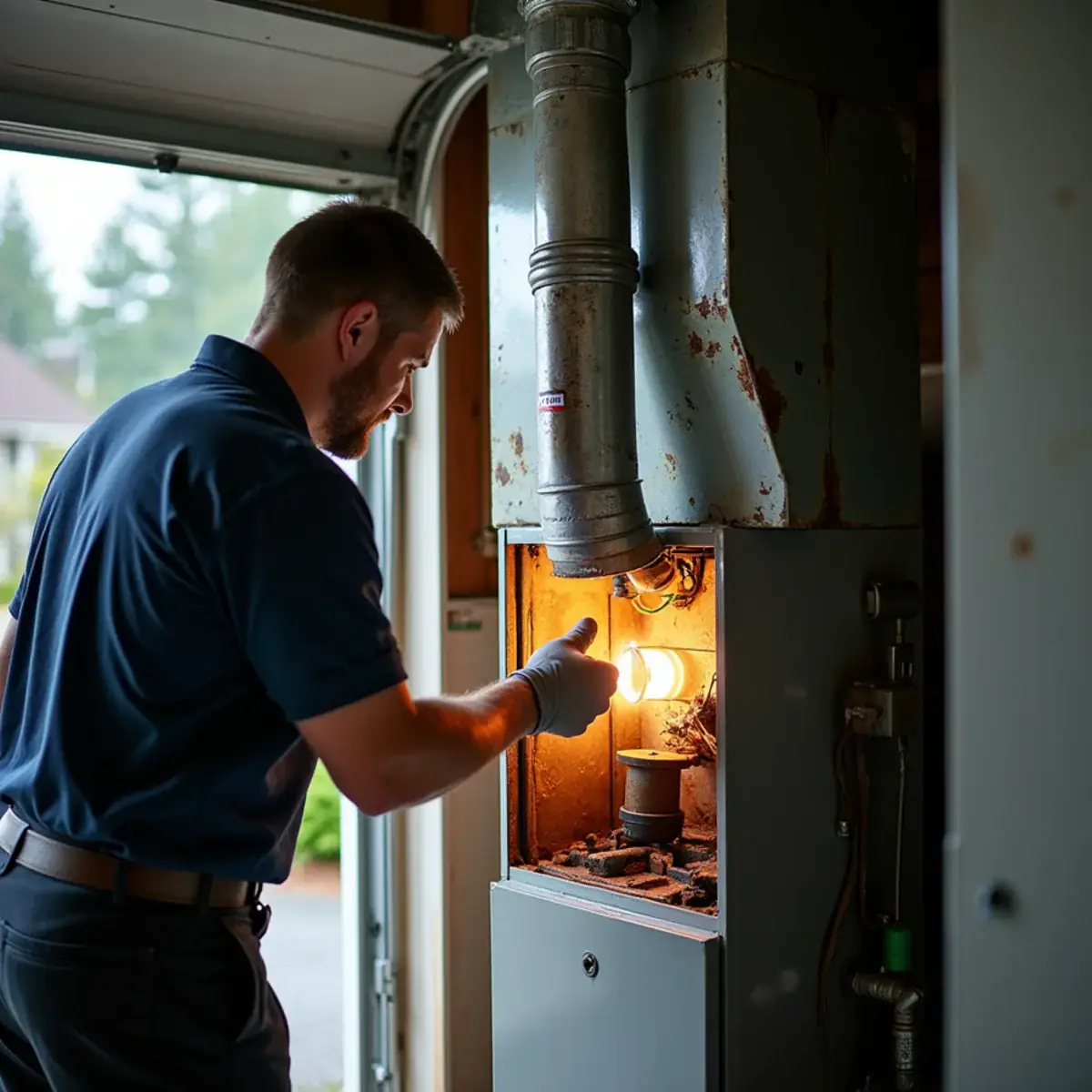
Furnaces in Kitsap crawl spaces and unheated garages live in damp air. Heavy rust on the burners, heat exchanger or cabinet floor, or a history of condensate leaks, shortens their life and can affect safe combustion.
A pattern of failures
One repair per winter is normal. Two or three a season, or a control board and an inducer motor in the same year, means more parts are near the end. Obsolete parts that take a week to arrive make each breakdown worse.
Comfort problems that repairs won’t fix
Rooms that never heat evenly, loud cycling and a furnace that runs constantly on cold days often trace back to poor sizing or duct design. A new furnace installed with a Manual J load calculation and duct corrections can fix what no repair will.
One situation skips the math entirely. If you smell gas near the furnace or a CO alarm sounds, don’t troubleshoot and don’t press reset. Get everyone outside, call 911 or Cascade Natural Gas’s emergency line from a safe distance, and book a diagnosis only after the utility or fire department clears the house. Our gas smell safety guide has the full steps.
For any other breakdown, photograph the data plate’s model and serial numbers first, so a repair estimate and a replacement bid can be compared later.
What an efficiency upgrade actually saves
Older furnaces with standing pilots often run around 60 to 70% efficiency. A modern 80% AFUE furnace wastes 20 cents of every gas dollar up the flue, and a 95% unit wastes about five. Moving from an old 70% furnace to a 95% model can cut gas use for heating by roughly a quarter. Your gas utility, Cascade Natural Gas in most of Kitsap, may also offer a rebate on high-efficiency furnaces, so check current programs before you buy.
High-efficiency furnaces need PVC venting and a condensate drain, which adds cost in some homes. In an unheated crawl space, the drain needs protection from freezing during cold snaps. A good installer plans for that rather than hoping for mild winters.
If you replace, look at the whole system
A replacement is the right time to ask whether you want cooling too. A full furnace-plus-AC system runs about $12,000–$17,500 as a regional range, and a heat pump paired with a gas furnace as a dual-fuel system is another option. For Gig Harbor homes with summer sun on west-facing glass, cooling often ends up on the list.
Whatever you choose, make sure the quote includes a permit. In Bremerton, a furnace install or relocation up to 100,000 Btu/h is a small $14.80 permit line item, and Port Orchard and Pierce County set their own fees. Either way, that inspection is cheap insurance on gas piping and venting. Our furnace installation process starts with sizing, not with a model number.
Lining up three furnace replacement bids
If the math points toward replacement, get at least three written bids and lay them side by side. Furnace bids usually differ because one quietly leaves out work another includes, not because one installer is cheaper. Weighing a heat pump instead? See heat pump vs. gas furnace in the Pacific Northwest.
- Capacity and AFUE backed by Manual J and Manual S, not copied from the old nameplate.
- PVC venting and a freeze-protected condensate drain on any 95% furnace, since a bid that skips them isn’t comparable.
- Removal and disposal of the old unit, regionally about $60–$350, shown as its own line.
- Permit, inspection and a startup combustion test, all listed in writing.
- A contractor registration you’ve checked with Washington L&I, and payments tied to equipment delivery, installation, inspection and closeout.
From the field
From the field: the evidence behind a replace recommendation
A replacement recommendation should come with proof you can see. When we suspect the heat exchanger, a flashlight glance isn’t enough. We run a combustion analysis in the flue, watch the burner flame as the blower starts, and put an inspection camera on the sections we can reach. A flame that lifts or rolls when air starts moving is a strong sign of a breach. If we condemn a furnace, you get the readings and photos, not just a red tag.
We also measure temperature rise across the furnace and compare it with the range on the rating plate. A furnace starved by restricted ducts trips its limit switch and cracks parts, and a new unit bolted to the same ducts inherits that problem. Some repeat complaints, like a furnace blowing cold air after a few minutes of heat, are really airflow faults.
Two things often get missed in the math. A registered furnace may still have covered parts, which makes a repair much cheaper than the ticket suggests. And obsolete boards or inducer motors can take days to arrive, which matters more in January than the dollar figure. Nursing an aging furnace through one last winter is a fair plan when the heat exchanger tests clean. Yearly furnace tune-up readings make that call easier.
- Flue CO and oxygen readings from a combustion analyzer
- Burner flame behavior as the blower starts
- Temperature rise versus the rating-plate range
- Warranty registration and data-plate manufacture date
FAQ
Quick answers
How long should a gas furnace last in Western Washington?
Most gas furnaces last roughly 15 to 20 years here, sometimes longer with regular maintenance and a dry installation location. Furnaces in damp crawl spaces or garages tend to age faster because of rust. Age alone isn’t a reason to replace, but past 15 years it’s smart to start budgeting and planning rather than waiting for a midwinter failure.
Is it safe to keep running a furnace with a cracked heat exchanger?
No. A cracked heat exchanger can allow carbon monoxide into your home’s air. If a technician confirms a crack, the furnace should be shut down until it’s repaired or replaced. Make sure you have working CO alarms on every level and near sleeping areas, and don’t restart the unit to get through a cold night.
When is the best time of year to replace a furnace in Kitsap?
Spring and early fall, if your furnace gives you the choice. Planning then leaves time for a load calculation, several written quotes, permit scheduling and a rebate check without the pressure of a no-heat night. A midwinter emergency narrows your options to whatever equipment is in stock. If the furnace is past 15 years and needed repairs last season, book the evaluation before the rainy season settles in.
Should I repair a furnace that’s still under warranty?
Usually, yes. If the failed part is covered, you typically pay only for labor, which tilts the math strongly toward repair. Coverage often depends on the furnace having been registered with the manufacturer after installation, and labor coverage is usually separate. Find the model and serial numbers on the data plate, check the manufacturer’s warranty lookup, and have the technician confirm the part number before ordering.
The bottom line
Repair or replace comes down to age, safety and the pattern of failures. A young furnace with a worn igniter deserves a repair. An old one with a cracked heat exchanger or a string of breakdowns deserves a plan.
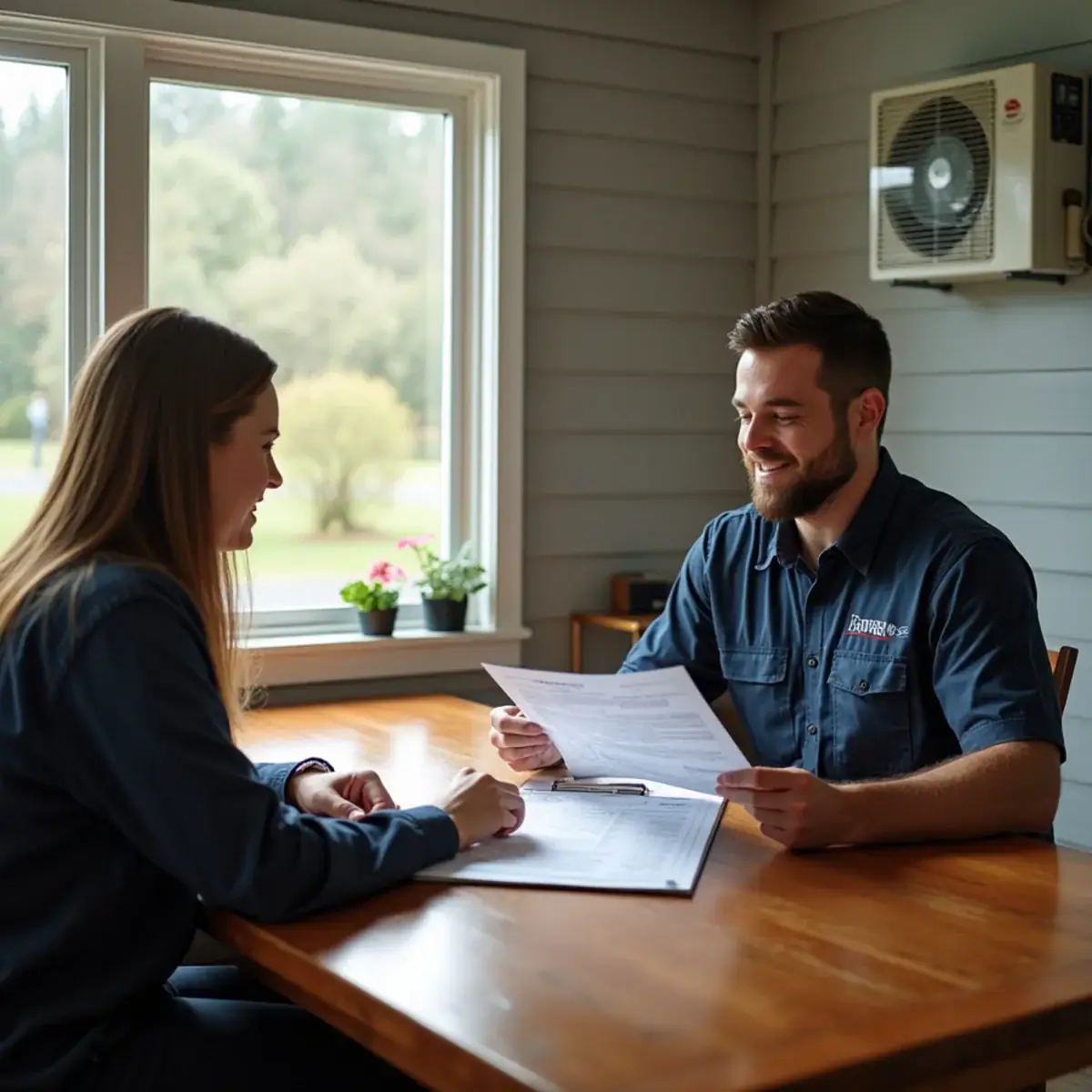
If you’re on the fence, ask for both options in writing: the repair cost today and a replacement quote based on a proper load calculation. Having both numbers side by side usually makes the choice obvious.
Sources & official references
- Washington L&I: verify a contractor’s registration and bond
- Cascade Natural Gas: gas safety and high-efficiency furnace programs
- ACCA: Manual J, Manual D and Manual S standards
- City of Bremerton: permits and fee schedule
Programs, rules and fees change. Confirm current details with the source before you act.