HVAC Contractor in Bremerton, WAHeat pumps, furnaces & honest repairs
When the furnace quits on a wet January night or the heat pump can’t keep up, you need a straight diagnosis — not a replacement pitch. We fix what’s broken, size new systems with a real load calculation, and put every option in writing.
A failed system needs safe next steps and a clear diagnosis. A replacement needs sizing, equipment matching, permits, rebate checks, warranty terms and a written scope. We handle both — plus the moisture side of comfort: ventilation, filtration, humidity and condensate problems that start in the crawl space. Homeowners, landlords and property managers across Bremerton get the same process, whether it’s furnace repair, a heat pump installation or duct cleaning for a damp crawl space.
System just quit?
What to do first when your heat or AC stops
Five steps that keep you safe and make the repair faster — whether it’s a furnace in Manette or a heat pump near Kitsap Lake.
1
Check the basics — without opening anything
Thermostat mode and setpoint, filter condition, and whether a breaker or furnace switch is off. Don’t remove panels on energized equipment.
2
Unsafe? Shut it off and step away
Gas smell, smoke, a burning odor or visible electrical damage means don’t restart it. For gas, leave the house and call 911 or your gas utility from outside.
3
Photograph the evidence
Thermostat error codes, model and serial plates, the filter, any leaks, and the electrical panel door — before cleanup or anyone hauls equipment away.
4
Call with the details
Equipment type, symptom, age if you know it, your address, and whether kids, older adults, tenants or anyone cold-sensitive is in the home.
5
Approve a diagnosis before a replacement
Unless there’s an immediate safety condition, authorize the diagnosis first. A failed igniter or capacitor shouldn’t turn into a new system by default.
Pro tip: If a system smells of gas or shows electrical damage, don’t keep cycling it on and off to “see if it catches.” Safe shutoff and useful photos come before any troubleshooting beyond the basics. More in our no-heat checklist for Bremerton homes and emergency HVAC repair.
Why Bremerton homeowners call us
Phone-first when it’s broken. Evidence-first when it’s time to replace.
Call or text and we’ll give you an honest arrival window — no-heat calls go to the front of the line.
Diagnosis first, sales pitch never
We find the failed part, show you the evidence and explain what else we tested — before anyone mentions replacement.
Sized with Manual J, D and S
Load calculation, duct review and equipment selection are three separate steps. We do all three instead of copying the old unit’s size.
Built for damp Kitsap homes
Crawl-space ducts, condensate drains, salt-air corrosion and defrost-water paths get checked on every visit, not just the box.
Written, line-item quotes
Equipment model, labor, permits, electrical, removal and exclusions — itemized, so you can compare us against anyone.
Your equipment, installed right
Bought your own mini-split? We’ll review the model and warranty terms and, if it’s a good fit, install and commission it properly.
Heat, gas and hot water under one roof
Furnaces, heat pumps, gas piping, fireplaces and water heaters — one contractor who understands how they share a flue and a gas line.
Locally owned
Based in Bremerton, WA
About us
A local HVAC contractor who knows what Puget Sound weather does to a house
Bremerton gets roughly 45 inches of rain a year, and much of the housing around the shipyard, Manette and West Bremerton was built long before anyone worried about duct sealing. That combination shows up in our work every week: sweating ducts in damp crawl spaces, condensate lines that clog with algae, outdoor coils matted with fir needles, and electrical panels that were never sized for a heat pump.
So every visit starts with the whole picture — equipment, ducts, crawl space, moisture and electrical capacity — before we recommend anything. Repairs come with the evidence. Replacements come with a load calculation, a written scope and a clear list of what’s included, what’s optional and what still needs verifying, including PSE heat pump rebate eligibility.
Bremerton sits on Sinclair Inlet and Dyes Inlet, with Puget Sound on three sides and roughly 45 inches of rain a year. Rain alone doesn’t break an HVAC system — but it’s why we inspect humidity, condensate, crawl-space exposure, duct insulation and corrosion before recommending equipment, instead of treating every house like a dry new build.
Much of the housing near Puget Sound Naval Shipyard, in Charleston, Manette and West Bremerton, predates modern duct sealing. We regularly find sweating ducts under the floor, condensate lines clogged with algae, and 60- or 100-amp panels that can’t carry a heat pump plus heat strips without an upgrade. Those findings change the right answer — sometimes toward duct cleaning and duct repair, sometimes toward ductless heat that skips the crawl space entirely.
Equipment age, model and serial numbers, fuel type and service history
Duct damage, insulation gaps, disconnected runs and hard-to-reach sections
Crawl-space moisture, standing water, biological growth or exposed ducts
Condensate lines and traps — blocked, poorly routed or freezing on a walkway
Electrical-panel capacity for a heat pump or backup heat strips
Oil-furnace or buried/above-ground oil-tank conditions when converting
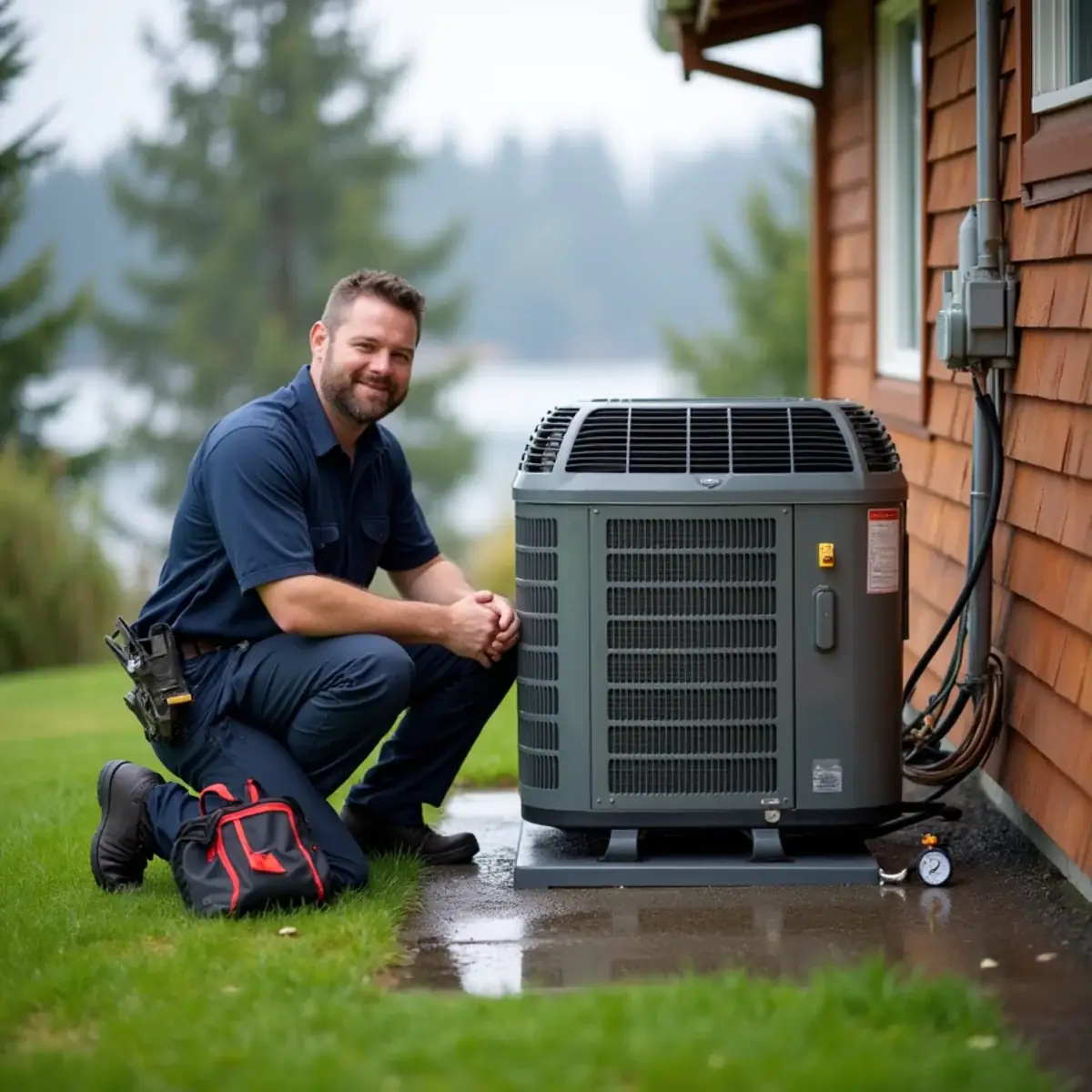
Outdoor-unit clearance, drainage, salt-air corrosion and the defrost-water path
Filtration and ventilation together — a tighter filter isn’t right for every blower
We document what we find instead of assuming every nearby home has the same condition.
Bremerton HVAC cost guide
What HVAC replacement costs in Bremerton — before anyone visits
Most HVAC contractors in Bremerton won’t put a number on their website. We think you should walk into an estimate knowing the ballpark. These are regional planning ranges for installed systems around Puget Sound — not our price list — and a full replacement commonly lands between $8,700 and $16,050. Another local estimate runs wider, from $6,400 to $23,000, because the house matters as much as the equipment.
What moves the number: equipment size from a real load calculation, duct condition, whether your panel can carry a heat pump and backup heat strips, permits, removal and access. A fair quote lists every one of those lines separately. Compare that with our heat pump cost guide for Bremerton.
Planning ranges only; repair and tune-up figures are a local competitor’s published ranges. Your final price requires a site visit and a written scope. Ranges reviewed .
Typical installed HVAC cost ranges around Bremerton, WA
System or line item
Typical range
Gas furnace, installed
$6,500 – $11,000
Central air conditioner
$6,500 – $10,500
Standard heat pump
$9,500 – $13,500
Cold-climate heat pump
$12,500 – $16,500
Full furnace + AC system
$12,000 – $17,500
Ductwork changes (allowance)
$1,000 – $5,000
Electrical panel upgrade (allowance)
$1,200 – $3,000
Backup heat strips or dual-fuel setup
$300 – $1,500
Old equipment removal (allowance)
$60 – $350
Furnace repair (published local range)
$150 – $700
Tune-up (published local range)
$80 – $200
How to read an HVAC quote before you sign
Get at least three written quotes for a replacement and compare them line by line. A low number that leaves out ducts, electrical or permits isn’t a lower price — it’s a smaller scope.
1Exact manufacturer, model number, capacity and efficiency ratings (SEER2, HSPF2 or AFUE) — plus the fuel and electrical requirements.
2Whether removal, disposal, duct changes, line-set work, condensate drains, electrical work, permits, inspection, startup and cleanup are included.
3Whether the design used ACCA Manual J, Manual D and Manual S — and a plain-English summary of what each one found.
4Equipment warranty, labor warranty, maintenance requirements, exclusions, financing terms and how any rebate is paid.
5Payment milestones tied to approved equipment, installation, startup, inspection and closeout — never the full price up front.
Financing and PSE rebate readiness
PSE has offered heat pump rebate paths for electric-resistance-to-heat-pump upgrades, hybrid heat-pump replacements and income-qualified gas-to-electric conversions. Programs, income rules, qualifying models and amounts change — so we verify current eligibility on PSE’s rebate pages before equipment is selected. Our Washington heat pump rebate guide explains what to check.
PSE eligibility and the qualifying model — confirmed before signing
Financing approval is separate from rebate eligibility
Who submits the rebate paperwork, and by what deadline
APR, term, fees, deferred-interest language and total repayment in writing
Installed price shown separately from incentives
Choosing a system
Furnace, heat pump, cold-climate heat pump or dual fuel?
A decision aid, not a ranking. The right system depends on your load, ducts, electrical service, fuel availability, backup-heat plan, moisture conditions and budget.
Comparison of common HVAC systems for Bremerton homes
Coordinated heating and cooling replacement in one project
Whether ducts, electrical, permits, removal, startup and warranty are included
Regional planning ranges, not our prices. Service life varies with installation quality, maintenance, corrosion exposure and parts availability — ask for a written estimate for your equipment rather than a generic number.
When repair makes more sense than replacement
Repair is reasonable when the failure is isolated, the system has been maintained, parts are available, there’s no serious safety issue, and the equipment still keeps the house comfortable. Replacement deserves a closer look when failures repeat, the heat exchanger or venting is compromised, heat distribution is poor, corrosion is severe, the repair approaches the value of the equipment, or the home is changing fuel.
Ask which component failed and what test proved it.
Ask which other major components are near the end of their life.
Compare the repair against a documented replacement scope — not a vague sales estimate.
Don’t upsize because the old unit was uncomfortable; require a load calculation.
For heat pumps, ask how backup heat, defrost, condensate and cold snaps will be handled.
Permits, credentials and payment terms you can verify
Proof beats badges. Here’s what to check for any Bremerton HVAC contractor — including us.
Washington registration, bond and insurance
Washington construction contractors must register with L&I and carry a surety bond (currently $15,000 for specialty contractors) and general-liability insurance. Check that the legal business name on the quote matches the registration and the payment recipient.
Anyone recovering, charging or repairing refrigerant circuits needs EPA Section 608 certification, and intentional venting is prohibited. Ask which technician on your job holds it — a generic logo on a proposal isn’t a credential.
Most installs and many alterations need a mechanical permit, and electrical work may need its own. Bremerton’s 2026 fee schedule lists $14.80 for a forced-air furnace up to 100,000 Btu/h, $13.70 for heating or cooling alterations and $14.70 for compressors up to 3 hp — line items, not project totals. We confirm the category before quoting.
Warranty and payment terms to get in writing
Equipment model and rebate-qualification status
Who registers the manufacturer warranty — and by when
Labor warranty length and exclusions
Maintenance required to keep the warranty valid
Deposit and milestone payments tied to real progress
Permit, inspection, startup and closeout responsibilities
Service areas
Every Bremerton neighborhood — and the whole Kitsap Peninsula
From Downtown Bremerton, West Bremerton, East Bremerton, Manette, Charleston, Illahee and Sheridan Park to Silverdale, Port Orchard and across Hood Canal.
As an HVAC contractor in Bremerton, we cover Downtown Bremerton and the Bremerton Boardwalk area, West Bremerton, East Bremerton, Charleston and Navy Yard City by the Puget Sound Naval Shipyard, Manette and Illahee across the Manette Bridge, Tracyton, Brownsville, Harrison Heights, Wheaton/Riddell, Wheaton/Sheridan, Sheridan Park, Rocky Point, Kitsap Lake and Gorst. Just beyond, Silverdale, Port Orchard, Poulsbo, Kingston and Bainbridge Island are regular stops. Response times depend on distance and the day’s schedule — call with your address and we’ll give you an honest window.
Bought a mini-split online and need it installed? Learn Washington’s permit and refrigerant rules, what installers check first, how line-set charge works, and the warranty questions to settle before the first wall penetration.
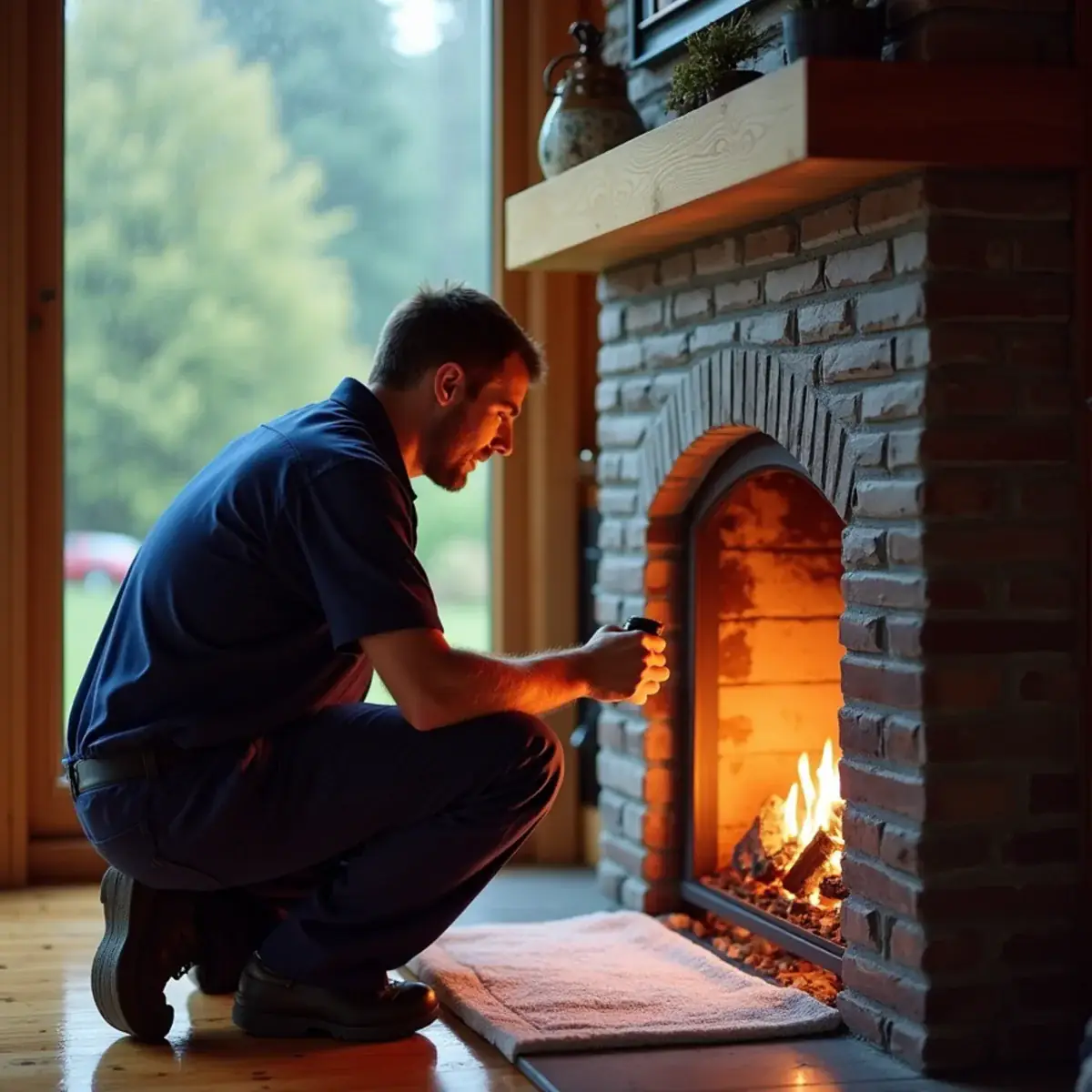
Before the first rainy evening, run through this gas fireplace checklist: pilot and flame, thermocouple and thermopile, glass and gasket, the outdoor vent cap, spiders in the burner and your CO alarms.
Part-time use, long storm outages and no gas mains make Hood Canal cabins their own heating puzzle. Here’s how ductless heat pumps, propane, wood stoves and freeze protection fit together in Belfair and Union.
What does an HVAC contractor in Bremerton, WA actually handle?
Heating, cooling and the systems around them: furnace and heat pump repair, new heat pumps and ductless mini-splits, furnace and AC replacement, seasonal maintenance, duct cleaning, gas piping, gas fireplaces and water heaters. In Bremerton that also means checking crawl-space ducts, condensate drains and electrical capacity, because damp marine air and older housing change what the right fix is.
How much does HVAC replacement cost in Bremerton?
Regional planning ranges put a full system replacement around $8,700 to $16,050, a gas furnace around $6,500 to $11,000 installed, a standard heat pump around $9,500 to $13,500 and a cold-climate heat pump around $12,500 to $16,500. Ductwork, panel upgrades, permits and removal move the number, so we price every job from a site visit and a written scope.
Is a heat pump a good fit for a Bremerton home?
Usually, yes. Kitsap winters are mild and damp, which is where heat pumps are most efficient. The details matter: a load calculation, a backup-heat plan for the occasional Arctic cold snap, a defrost drain path that won’t freeze on a walkway, and enough electrical capacity. We check all four before recommending equipment.
Should I repair my furnace or replace it?
Repair when the failure is isolated, the system is safe and parts are available. Consider replacement when breakdowns keep repeating, the heat exchanger or venting is compromised, or the repair approaches the value of the equipment. We show you the failed part and the evidence, then give written repair and replacement options side by side.
Do you install mini-splits or equipment I bought myself?
In many cases, yes. We’ll review the model, line-set length, electrical requirements and warranty terms first, because some manufacturers only honor warranties when a certified installer registers the unit. If it’s a good match for the home, we install, pressure test, evacuate and commission it the same way we would our own equipment.
Do HVAC projects in Bremerton need a permit?
Most installations and many alterations do. Bremerton’s fee schedule lists separate mechanical line items for furnace installation, heating or cooling alterations, and compressors, and electrical work may need its own permit through L&I. We confirm the right permit category before quoting and schedule the inspection as part of the job.
What does a furnace repair usually cost in Bremerton?
A local competitor publishes a furnace repair range of $150 to $700 and a tune-up range of $80 to $200. Treat those as directional, not universal. Before you approve work, ask whether the price includes the diagnosis, parts, labor, after-hours timing, testing and follow-up, and ask to see the failed part.
What are Manual J, Manual D and Manual S?
They are three separate ACCA design steps. Manual J is the room-by-room heating and cooling load calculation. Manual D checks whether the ductwork can deliver that air. Manual S matches specific equipment to the calculated load and duct design. Ask for all three instead of accepting a square-foot rule or the old unit’s size.
Can I get a PSE rebate for a heat pump?
Possibly. PSE has offered rebate paths for electric-resistance-to-heat-pump upgrades, hybrid heat pump replacements and income-qualified gas-to-electric conversions. Eligibility, qualifying models, income rules and amounts change, so confirm the current program before choosing equipment or signing a contract, and ask who submits the paperwork.
How do I verify an HVAC contractor in Washington?
Look up the exact business name on the Washington L&I contractor verification site and confirm an active registration, bond and liability insurance. Make sure the name on the quote matches the registration and the payment recipient, and ask which technicians handling refrigerant hold EPA Section 608 certification.
When should I schedule HVAC maintenance or a replacement in Bremerton?
Book heating checks before the fall rains and cooling checks before summer heat waves. Spring and fall are also the best windows to plan a replacement, ahead of winter failures and heat-wave demand. If your system is unsafe or has already failed, don’t wait for the ideal season; get a safe repair-or-replace assessment now.
Which areas around Bremerton do you serve?
All of Bremerton, including Manette, East and West Bremerton, Navy Yard City, Charleston and Kitsap Lake, plus Silverdale, Port Orchard, Poulsbo and the rest of Kitsap County. We also schedule installs and planned work in Mason, Pierce, Jefferson and Clallam counties. Call with your address and we’ll tell you straight whether we can reach you quickly.
What should I do if I smell gas near my furnace or fireplace?
Leave the house now. Don’t flip switches, use the thermostat or start a car in an attached garage. Once you’re outside and well away, call 911 or your gas utility’s emergency line — Cascade Natural Gas serves most of Kitsap County. After the utility has made it safe, call us to find and repair the source before the appliance goes back into service.
Two ways to get help
Urgent repair guidance
No heat, no cooling, or something smells wrong?
Call and tell us your address or neighborhood, the equipment type, the symptom, any thermostat code, any visible leak or odor, and whether you’ve shut the system off. We’ll help you find the safe next step before anyone talks about repair or replacement scope.
Request a free written assessment. Helpful to include: equipment type and approximate age, model plate photos, fuel type, your comfort or humidity complaints, urgency, and any quotes you’d like compared. We’ll cover sizing, permits, rebate verification and financing questions in the written options.
No-surprise scope: you’ll know what we found, what we recommend, what’s optional, what’s included in the price, what still needs verifying and what happens next. No equipment moves forward without a clear scope, a documented sizing path, a permit discussion, a warranty explanation and your authorization.
No heat? Planning a heat pump? Let’s talk.
Call or text and we’ll give you an honest arrival window — no-heat calls go to the front of the line.