A heat pump that’s icing over, blowing lukewarm air or running nonstop usually has one specific fault, and finding it is the whole job. Our heat pump repair in Bremerton, WA starts with measurements, not guesses: coil temperatures, refrigerant pressures, airflow and a full defrost cycle.
Kitsap winters are rarely brutally cold, but weeks of 35–42°F with near-saturated air mean the outdoor coil frosts constantly. When the defrost board, sensor or reversing valve starts failing, the system quietly hands the load to its heat strips, and the first warning is often the power bill.
We work on ducted heat pumps, dual-fuel systems and ductless heads, from Manette ramblers to newer builds covered by our heat pump service in Silverdale. If a unit is truly past saving we’ll say so and walk you through heat pump installation options, but most of these calls end with a repair.
Reviewed · regional price ranges and rebate details are rechecked at each update.
Signs You Need Heat Pump Repair in Bremerton
Some of these are normal behavior that looks alarming. Others are early warnings worth a call before the next cold snap.
Outdoor unit encased in ice for hours
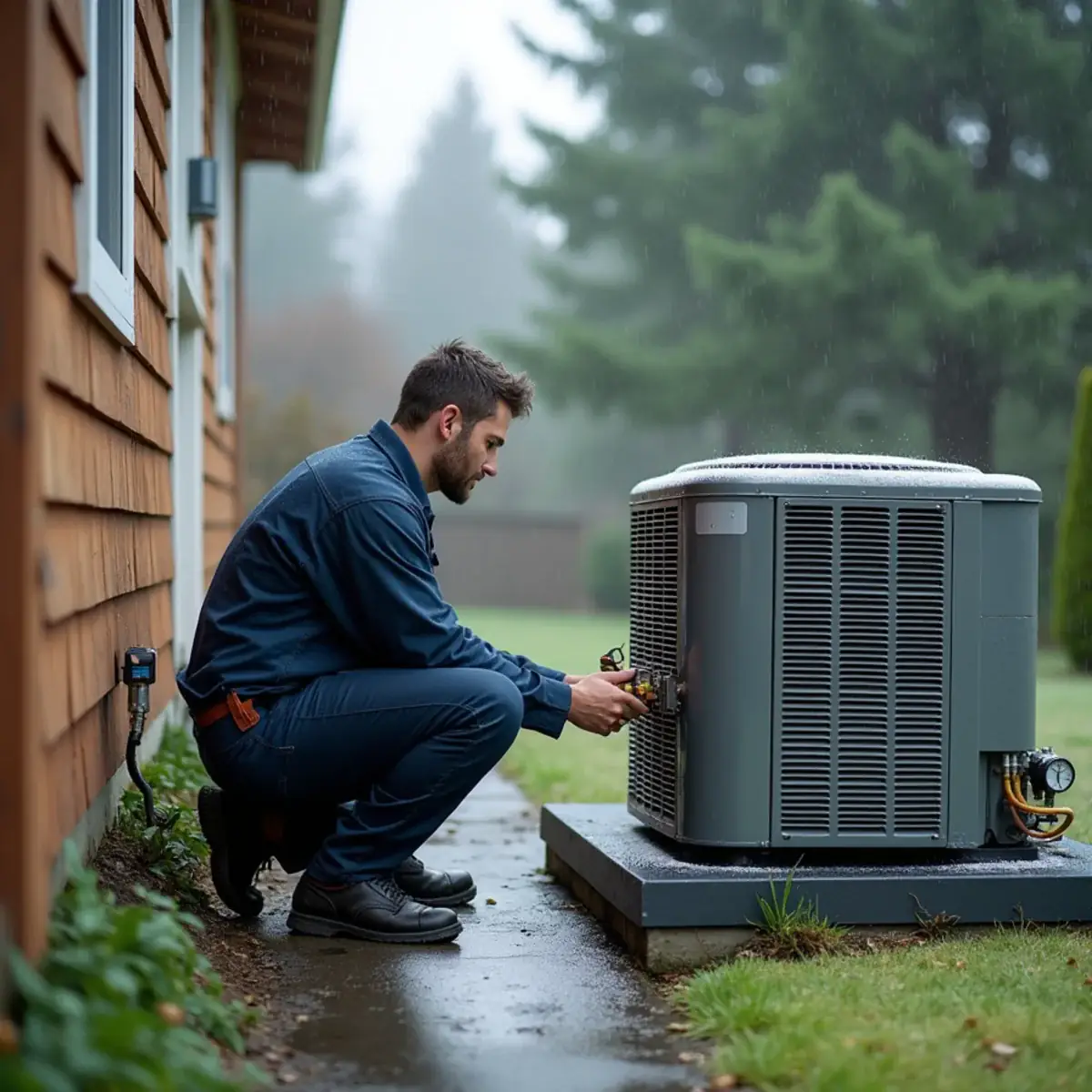
Light frost that clears every 30–90 minutes is normal. A solid block of ice that never sheds points to a failed defrost sensor or board, a stuck reversing valve, low refrigerant or a dead outdoor fan motor.
“Aux” or “Em Heat” showing all day
If the thermostat shows auxiliary heat most of the day at 40°F, the compressor isn’t keeping up. Strips cost roughly two to three times as much to run, so this one gets expensive fast.
Air at the registers feels barely warm
Heat pump supply air normally runs around 90–100°F, cooler than a gas furnace. Air in the low 70s on a mild day suggests a refrigerant, valve or airflow problem.
Won’t restart after a windstorm outage
Tripped breakers, a thermostat that lost its settings or a lockout after a brownout are common. Our guide to restarting a heat pump after a power outage covers the safe order of steps.
A cold-snap pattern worth knowing: when Kitsap drops into the teens during an Arctic outbreak, nearly every heat pump leans on backup heat, and that’s expected. What isn’t expected is the house losing ground anyway. That usually means a heat strip element, sequencer or breaker has failed, so the backup is running at part strength. It’s a common January call from all-electric homes in Tracyton and Illahee. If the thermostat shows Aux and the house still won’t hold temperature, call before the next cold night.
What a heat pump repair visit covers
Heat pumps fail in layers, so the visit covers every layer before anything is replaced. You get:
Settings and stored codes reviewed
Thermostat mode, balance point and aux lockout settings, plus any fault history on the outdoor board or ductless head.
Refrigerant circuit readings
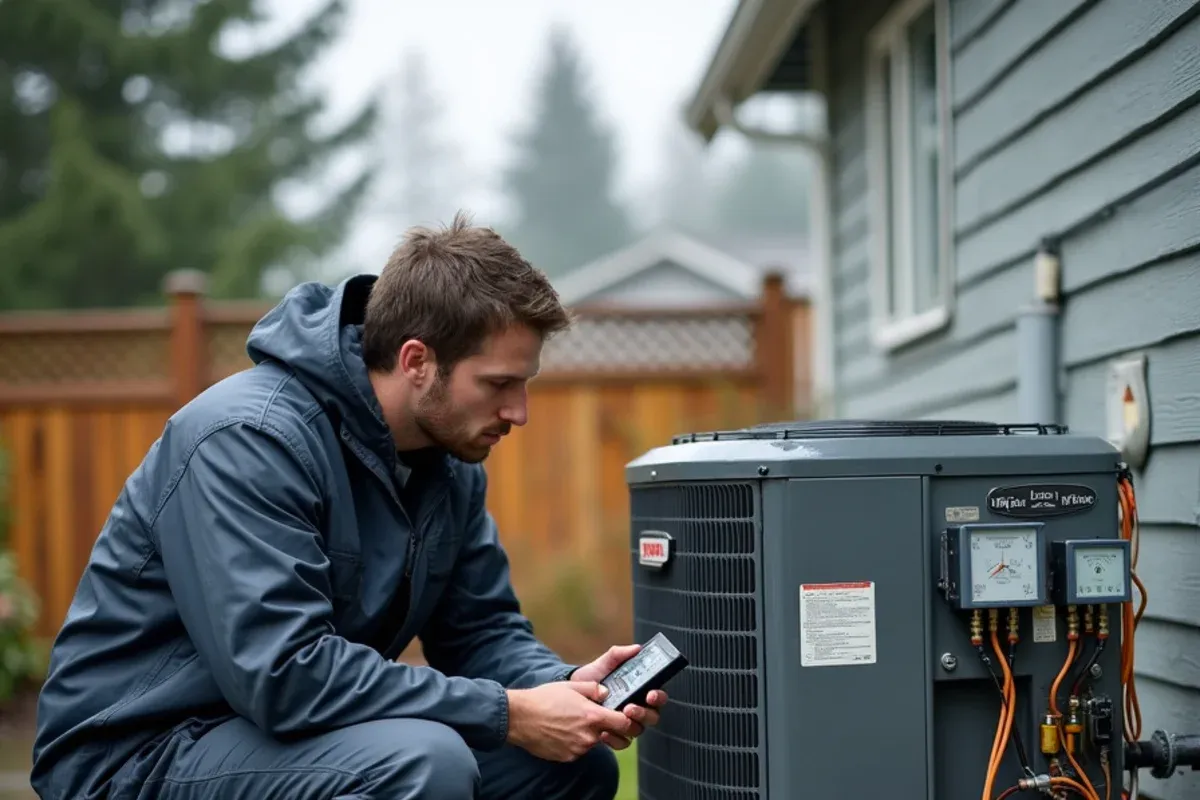
Suction and liquid pressures with superheat and subcooling, recorded on the invoice rather than just glanced at.
Leak search when the charge is short
Electronic detector and bubble test at flare nuts, service valves and coil joints before any refrigerant goes in.
Defrost verified start to finish
Sensor reading, board initiation, reversing valve shift and outdoor fan restart all watched in one forced cycle.
Backup heat measured element by element
Amp draw on each heat strip and its sequencer, so a half-working backup doesn’t hide until the next freeze.
Repair plus a verified heating run
After the fix, supply-air temperature, compressor amps and a clean defrost confirm it worked, and the pounds and ounces of refrigerant recovered or added are written down.
How We Diagnose and Repair Your Heat Pump
Every heat pump call follows the same order, so nothing gets assumed.
- 1
Confirm the complaint and the settings
We check thermostat mode, aux heat lockout settings and stored error codes first. Misconfigured thermostats cause plenty of “bad heat pump” calls.
- 2
Check airflow first
Filter, return grilles, blower speed and indoor coil. Weak airflow drives up pressures in heating mode and can mimic a refrigerant problem.
- 3
Measure the refrigerant circuit
Pressures, superheat and subcooling tell us whether the charge is right. Our techs hold EPA Section 608 certification, and we find leaks before adding refrigerant instead of topping off a system that will be empty again by February.
- 4
Force a defrost and watch it
We run the defrost board, coil sensor, reversing valve and outdoor fan through a complete cycle, which is where many Kitsap winter faults hide.
- 5
Test the electrical side
Capacitors, contactor, crankcase heater, heat strip sequencers and breakers. Salt air corrodes terminals faster near the water, so connections get a close look.
- 6
Repair, then verify under load
After the fix, we run heating mode long enough to confirm supply temperature, amp draw and a clean defrost.
What Drives Heat Pump Repair Cost
We quote after diagnosis. The price depends mostly on which part failed and how hard it is to reach.
- The failed component
- A capacitor or contactor is a small repair. A reversing valve or compressor is a major one that means recovering refrigerant, brazing and a full evacuation.
- Refrigerant type
- R-22 is no longer produced, so older systems are expensive to recharge. R-410A and newer A2L refrigerants cost less but still need a leak repair first.
- Where the leak is
- A leaking flare nut on a mini-split is quick. A pinhole in an indoor coil inside a crawl space air handler takes far longer.
- Access
- Air handlers squeezed into crawl spaces or attics, common in older Bremerton homes, add labor.
- After-hours timing
- Night and weekend visits cost more than a scheduled daytime call.
These are the factors, not a quote. The final price requires a site visit and diagnosis, and you’ll have it in writing before any repair starts.
Why Kitsap’s Damp Cold Is Hard on Heat Pumps
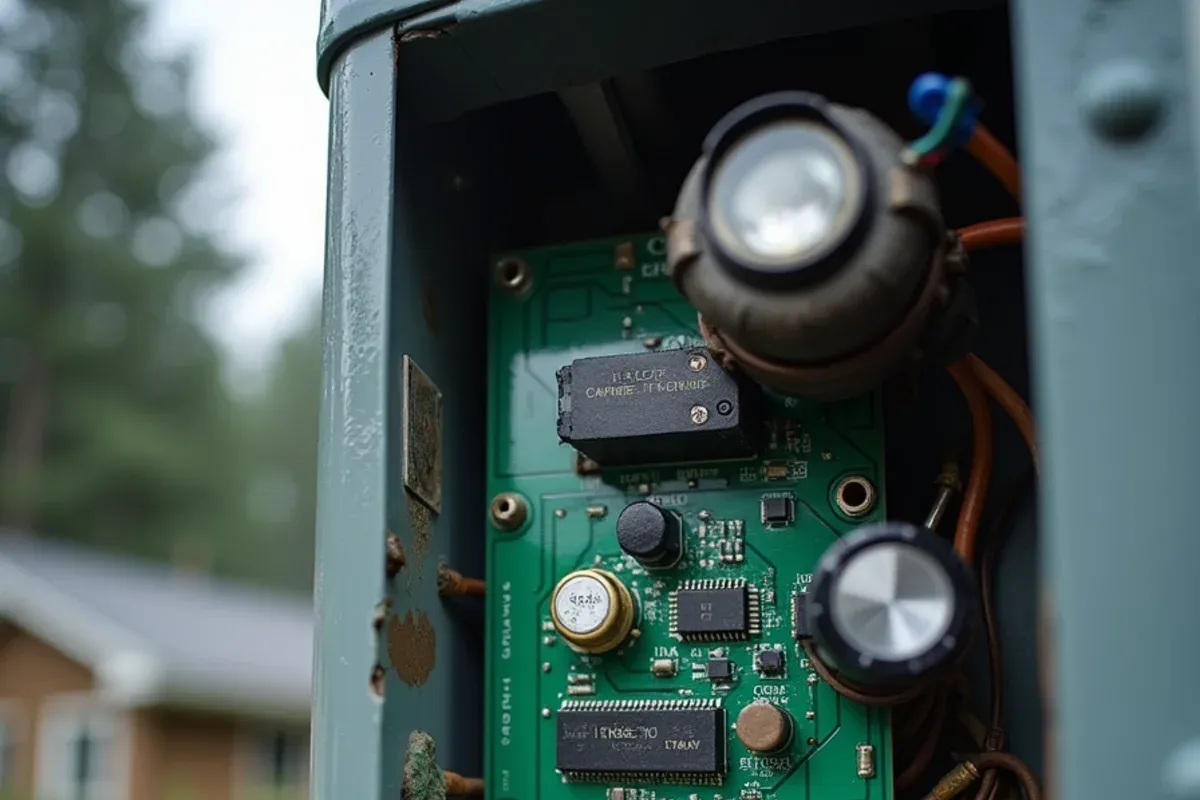
Most heat pump failures we see in Bremerton trace back to moisture rather than extreme cold. The outdoor coil sits in air near 100% humidity for much of the winter, so frost forms fast and the defrost cycle runs far more often than it would in a dry climate.
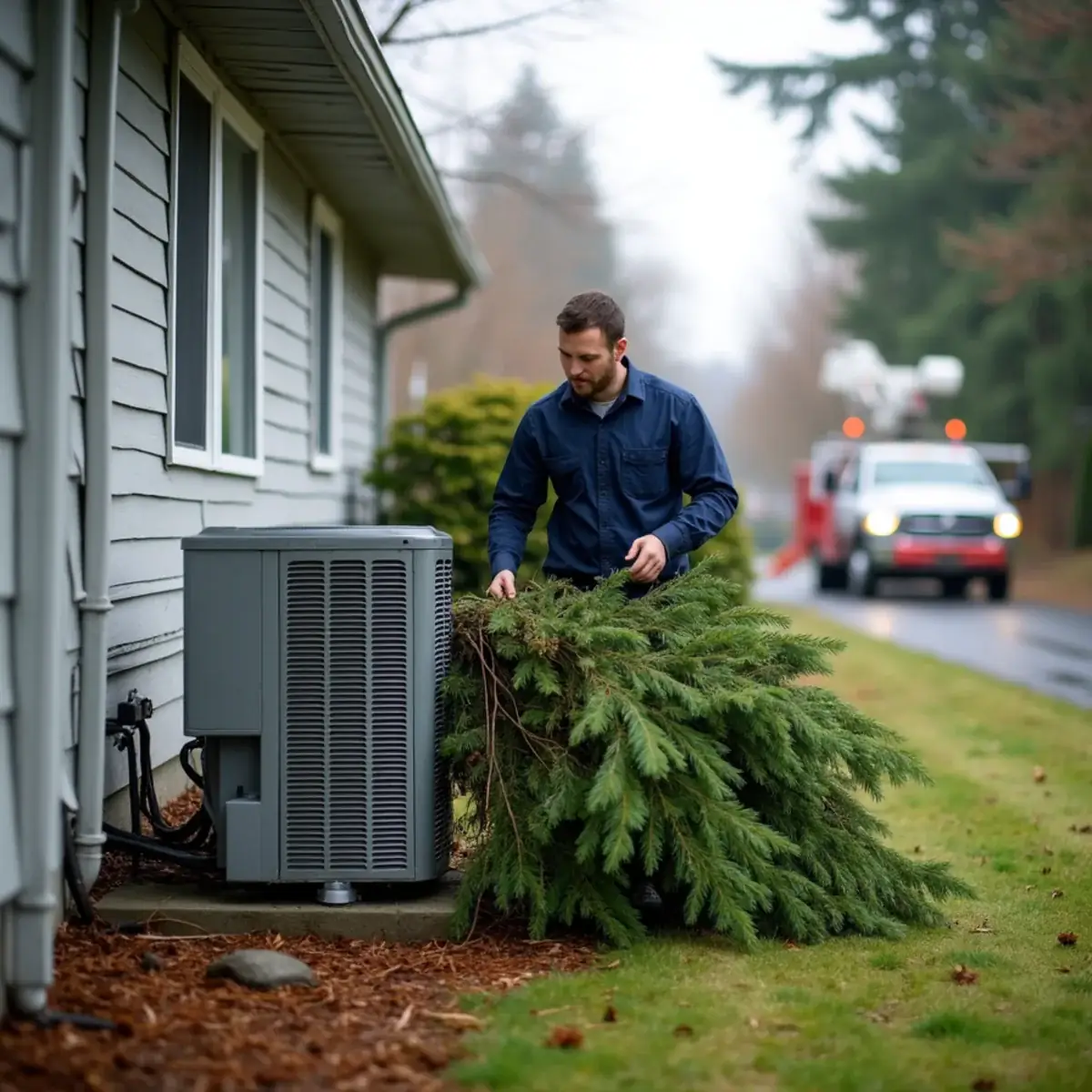
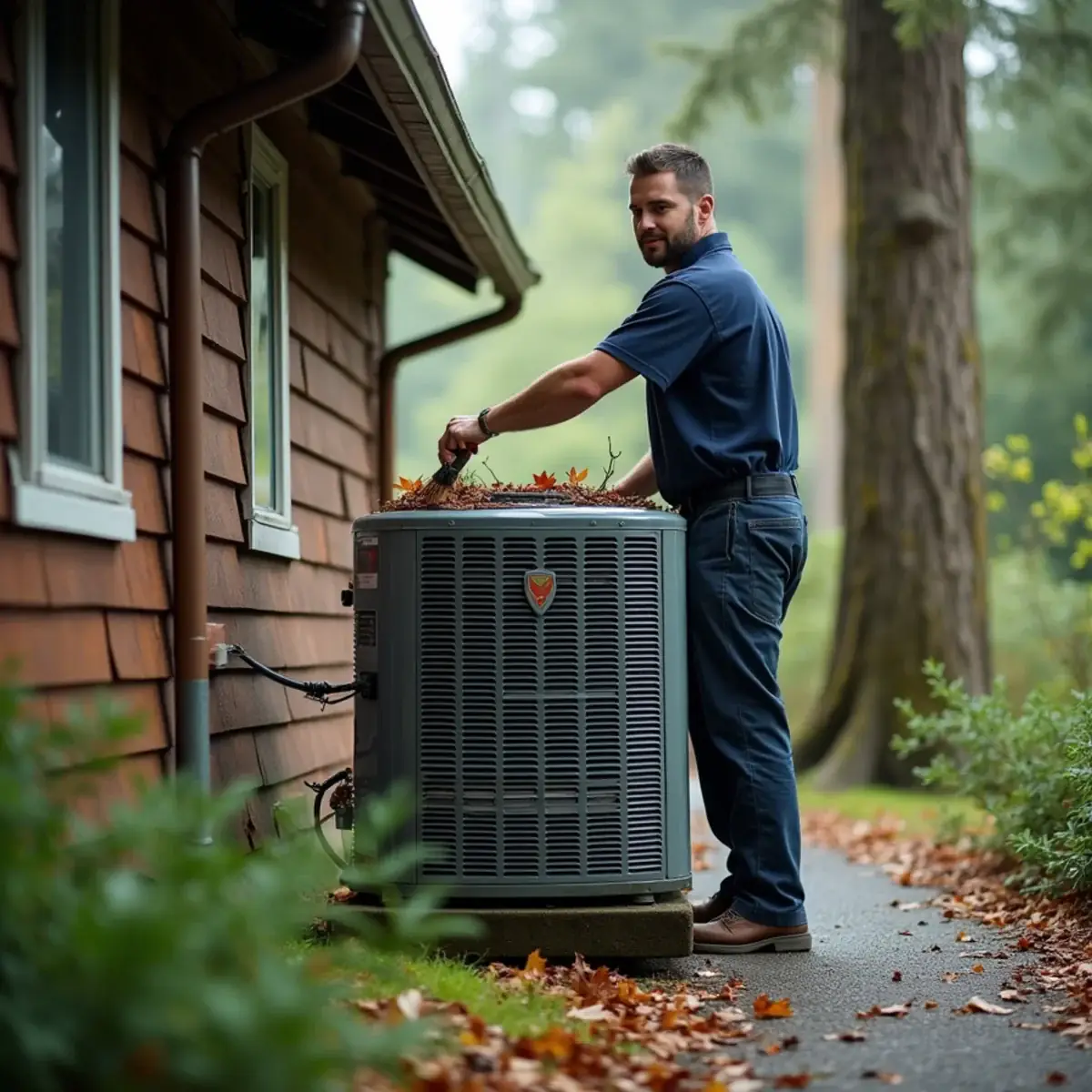
Fir needles and moss make it worse: a packed coil frosts sooner and defrosts slower. Units tucked under eaves often sit in a drip line that refreezes on the top grille, a pattern we see every January for heat pump owners in Chico and around Kitsap Lake.
The fix is often simple: raise the unit on a stand, redirect the drip, keep 18–24 inches of clearance and book seasonal heat pump maintenance each fall. Our article on keeping a heat pump clear in Western Washington covers the homeowner side.
Repair or Replace? Our Honest Rule of Thumb
We repair far more heat pumps than we replace. A failed capacitor, defrost sensor or fan motor on a ten-year-old system is almost always worth fixing.
The math changes when a compressor or reversing valve fails on an older R-22 system, or when the same coil keeps leaking. Regional planning ranges for replacement run roughly $9,500–$13,500 for a standard heat pump and $12,500–$16,500 for a cold-climate model, before any rebates.
If a failure leaves you without heat on a freezing night, emergency HVAC repair stabilizes the house first; the repair-or-replace talk comes later, with numbers. Waterfront homes in Rocky Point see extra salt exposure, which shortens outdoor unit life.
Compressor or reversing valve failure: what to ask before you decide
These are the repairs that turn a service call into a repair-or-replace decision, so the evidence matters more than usual.
If replacement wins, ask whether a cold-climate model or a different backup-heat setup fits the house better, and confirm current utility rebate eligibility before signing. Our heat pump installation cost guide for Bremerton shows how those numbers usually break down.
- Is the compressor really dead? A failed capacitor or contactor can mimic one. Ask whether the windings were tested for an open circuit or a short to ground, and what the amp draw showed.
- Why did it fail? A slow leak, a sticking reversing valve or a defrost fault that let liquid refrigerant flood back is often the cause, and a new compressor without that fix inherits the problem.
- What does the manufacturer cover? Parts coverage often depends on whether the unit was registered after install, and labor is usually separate. Have the model and serial numbers ready so coverage can be checked first.
- How is the refrigerant handled? Ask for the recovered and recharged amounts on the invoice, from a technician with EPA Section 608 certification. Intentional venting is prohibited.
- Will a new outdoor unit match the indoor coil? Replacing half of an older system can leave a mismatched pair that never reaches its rated efficiency.
Why homeowners trust us with heat pump repair
A heat pump can look fine and still cost you money on strip heat all winter. These habits keep our repairs honest:
Leaks found, not fed
Refrigerant is handled under EPA Section 608 rules, recovered and weighed, and a short charge starts a leak search instead of a top-off.
Readings on paper
Superheat, subcooling, amp draw and supply temperature go on your record with the date, so the next tech starts from facts.
Defrost trouble is our winter normal
Weeks of 38-degree drizzle make defrost faults the most common heat pump call here, and we test that cycle every time.
Ducted and ductless alike
Central systems, dual-fuel setups and wall-mounted ductless mini-split heads are all diagnosed the same measured way.
Sizing math if replacement comes up
When repair no longer makes sense, the next step is a Manual J load calculation and Manual S equipment selection, not a guess based on the old unit’s size.
FAQ
Heat Pump Repair questions from Bremerton homeowners
Why is steam coming off my heat pump in winter?
That’s almost always the defrost cycle. When the outdoor coil frosts over, the system briefly reverses to warm the coil, and the melting frost turns to steam. It’s normal in Bremerton’s damp cold, sometimes several times an hour. Call for service if the unit stays encased in ice, if the steam is constant, or if you smell anything burning.
Can you just add refrigerant to my heat pump?
Refrigerant doesn’t get used up. If the charge is low, there’s a leak, and adding refrigerant without finding it means paying for the same problem again in a few months. We locate the leak, repair it where practical, pull a deep vacuum and weigh in the correct charge. All refrigerant handling is done by EPA Section 608 certified technicians.
Should I switch to emergency heat if my heat pump stops working?
As a short-term measure, yes. Emergency heat runs only the electric strips, which keeps the house warm while you wait for service. It costs noticeably more to run, so don’t leave it that way for weeks. If the outdoor unit is iced solid, it also protects the compressor.
Can a heat pump keep a Bremerton home warm through winter?
In a typical Kitsap winter, yes. Most of the season sits in the mid-30s to mid-40s, where a correctly sized heat pump carries the house on its own. During the occasional Arctic outbreak into the teens, output drops and heat strips or a dual-fuel furnace help. If your system can’t hold temperature at 40°F without auxiliary heat, that isn’t normal winter behavior; it points to a fault, a low charge or an undersized unit worth diagnosing.
Why does my heat pump run almost nonstop in winter?
Some long run time is normal. Variable-speed and inverter heat pumps are designed to run steadily at low output rather than cycle on and off. It becomes a problem when the house still can’t reach the setpoint, auxiliary heat shows most of the day in mild weather, or your bill jumps. Those point to low charge, poor airflow, a defrost fault or an undersized system.
How long should a heat pump last on the Kitsap Peninsula?
Many heat pumps last around 12 to 15 years here, and some go longer with regular care. They run in both seasons, so they log more hours than a furnace. Outdoor units near salt water often corrode sooner, and coils packed with needles and moss wear faster. Age alone doesn’t mean replace; repeated major failures or a leaking coil on an older system usually does.
Heat pump repair on salt, wind and new-build streets
Salt shortens outdoor unit life. Around Liberty Bay in Keyport, terminals and fins corrode first, and wind-exposed homes near Point No Point in Hansville or on the bluffs of Kingston take storm debris and gusts that tip outdoor units off level.
In newer Port Orchard subdivisions, builder-grade installs often come down to condensate and charge problems, while variable-speed systems across Gig Harbor need inverter-board diagnostics rather than a parts cannon.
We provide heat pump repair across Bremerton and nearby communities, including:
- Heat Pump Repair in Kitsap County
- Heat Pump Repair in Port Orchard
- Heat Pump Repair in Silverdale
- Heat Pump Repair in Chico
- Heat Pump Repair in Erlands Point-Kitsap Lake
- Heat Pump Repair in Navy Yard City
- Heat Pump Repair in Rocky Point
- Heat Pump Repair in Tracyton
- Heat Pump Repair in Enetai
- Heat Pump Repair in East Port Orchard