Short answer
If you smell gas near your furnace or fireplace in Washington, get everyone, including pets, out of the house right away without using switches, phones or openers inside. From outside, call 911 or your gas utility’s emergency line, Cascade Natural Gas in most of Kitsap and Mason. Stay out until responders say it’s safe.
If you smell gas right now, leave now. Get everyone, including pets, out of the house. Then, from outside and well away from the building, call 911 or your gas utility’s emergency line: Cascade Natural Gas in most of Kitsap and Mason counties, or PSE where it supplies gas. Don’t flip light switches, unplug anything, use the garage door opener or try to find the leak. That rule applies to any gas smell near a furnace, fireplace or water heater in Washington, no matter how faint it seems.
Once everyone is safe and the utility has responded, the rest of this guide explains what causes these leaks, how propane differs from natural gas, and what happens before your furnace or fireplace can run again.
The first five minutes
Speed matters more than diagnosis. A spark from a switch, a phone charger being pulled out, or a doorbell can ignite gas that has built up in a room.
- Walk out. Leave the door open behind you if it’s on your way.
- Don’t use anything electrical inside, including light switches, thermostats and the garage door opener.
- Don’t light a match or lighter, and don’t start a car parked in an attached garage.
- Call from outside, from a spot where you can’t smell gas. Use 911 or your gas utility’s 24-hour emergency line. It’s worth saving that number, printed on your gas bill, in your phone today.
- Warn close neighbors if the smell is strong outdoors too.
- Don’t go back in until the utility or fire department says it’s safe.
What that gas smell near your furnace actually is
Natural gas has no smell of its own. Utilities add an odorant, mercaptan, that smells like rotten eggs or sulfur so leaks get noticed. If you’re smelling that near the furnace or fireplace in a Washington home, treat it as gas until a professional proves otherwise.
There are harmless look-alikes. A furnace burning off a season’s dust on its first cold morning smells dusty and hot for an hour. A dry floor-drain trap can smell like sewer gas. But you shouldn’t be the one deciding which it is. Call first, and let the responder sort it out.
Propane is different
Many homes around Belfair, North Mason and the Hood Canal shoreline run on propane instead of piped natural gas. Propane is heavier than air, so it settles low into crawl spaces, basements and floor-level fireplaces instead of drifting up and out. If you’re on propane, get out, then call 911 and your propane supplier’s emergency number. Shut the tank valve only if you can do it safely on your way out.
Where leaks usually start
When we trace a leak after the utility has made things safe, it tends to come from a short list of places:
- Old flexible appliance connectors, especially uncoated brass connectors from decades-old installs, which can crack at the flare nuts.
- Threaded fittings and unions at the furnace, water heater or fireplace that have loosened over years of heating and cooling.
- Fireplace key valves and log-set connections, particularly on older inserts that have been relit and adjusted many times.
- Corroded pipe in damp crawl spaces, a real issue under many older Kitsap homes where black iron sits in wet soil or against concrete.
- Gas valves and pilot assemblies on older furnaces and fireplaces that have reached the end of their life.
After the utility clears the leak
The utility’s job is to make the site safe. That may mean shutting off your meter and tagging an appliance as unsafe to use. Their tag stays until the problem is repaired, and the gas typically can’t be restored until the repaired system passes a pressure test.
Repairs to gas piping generally require a permit and should be handled by someone qualified for gas work. Our emergency HVAC repair techs can locate the leak with an electronic detector, repair or replace the faulty section, and coordinate the relight. If the piping itself is corroded or undersized, gas line repair and installation is the long-term fix. For fireplaces that were the source, a full gas fireplace service checks the valve, pilot assembly and venting before it goes back into use.
Before anyone opens a wall or swaps a connector, check who you’re hiring. Look up the business with the Washington L&I contractor verification tool, confirm the registered name matches the written quote and the payment recipient, and ask whether a permit will be pulled for the piping repair. Photograph the utility’s tag and keep it with the permit and repair invoice. That file matters if the appliance acts up later or the house is sold.
If a water heater shares the line that leaked, have its connector and venting looked at in the same visit; our notes on water heater strapping and venting in Washington explain what a compliant setup includes. For a fireplace that was the source, work through the fall gas fireplace checklist once it has been repaired and cleared.
Carbon monoxide is a separate danger
Carbon monoxide has no smell at all. It comes from incomplete combustion, a blocked flue or a cracked heat exchanger, not from a gas leak. Your nose won’t warn you, which is why Washington requires CO alarms in most homes.
If a CO alarm sounds, or several people in the house have headaches, nausea or dizziness that ease when they step outside, leave and call 911. Don’t silence the alarm and reopen windows as a fix.
From the field
How a gas leak is traced, repaired and cleared for relight
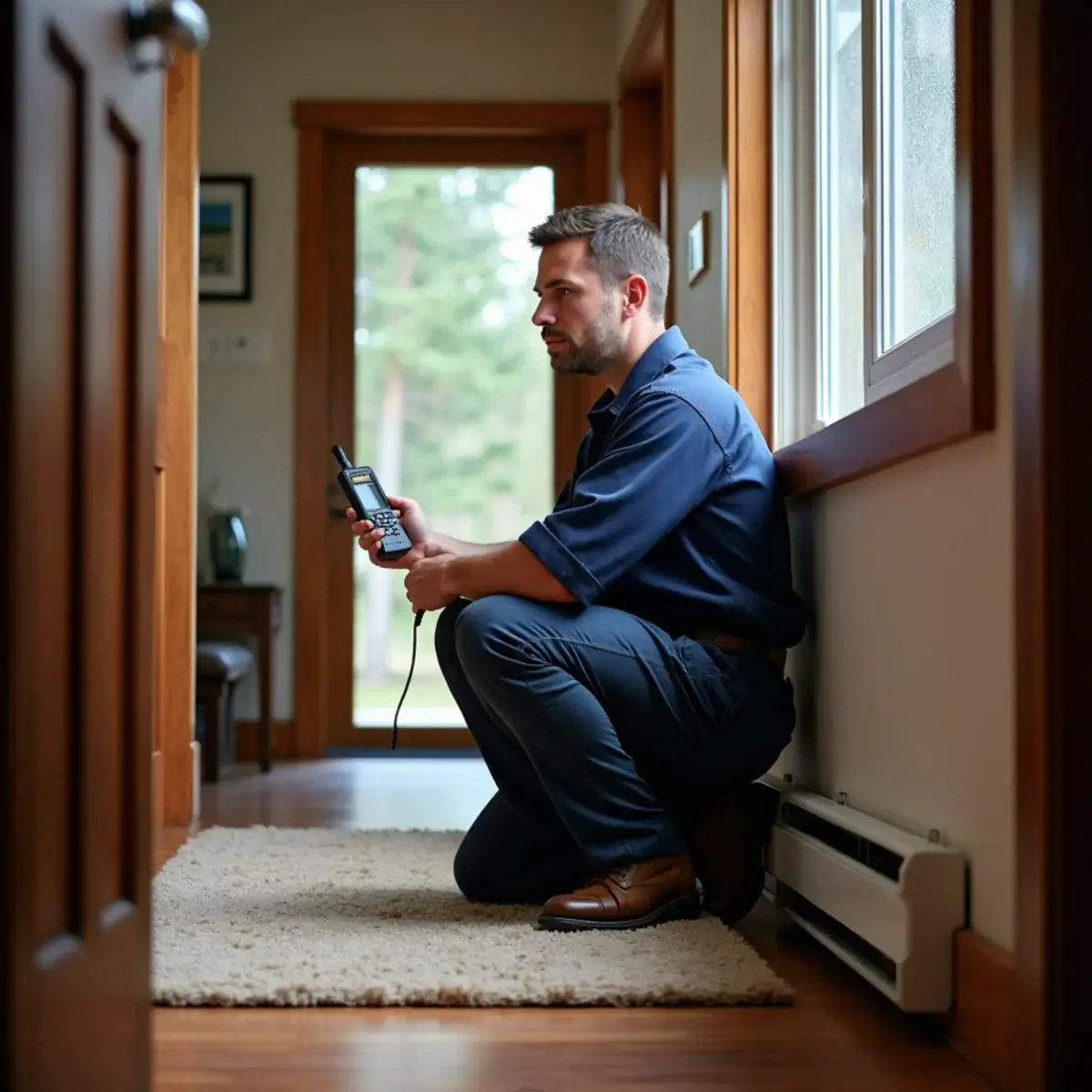
Once the utility has made the house safe, finding the actual leak is methodical work. A tech runs a combustible gas detector slowly along the piping and every connection, from the meter to each appliance valve. When the detector reacts, leak detection solution brushed on the fitting confirms the exact spot with bubbles. Soapy water alone misses small leaks on the underside of pipe, which is why a clean bubble test by a homeowner never clears a system.
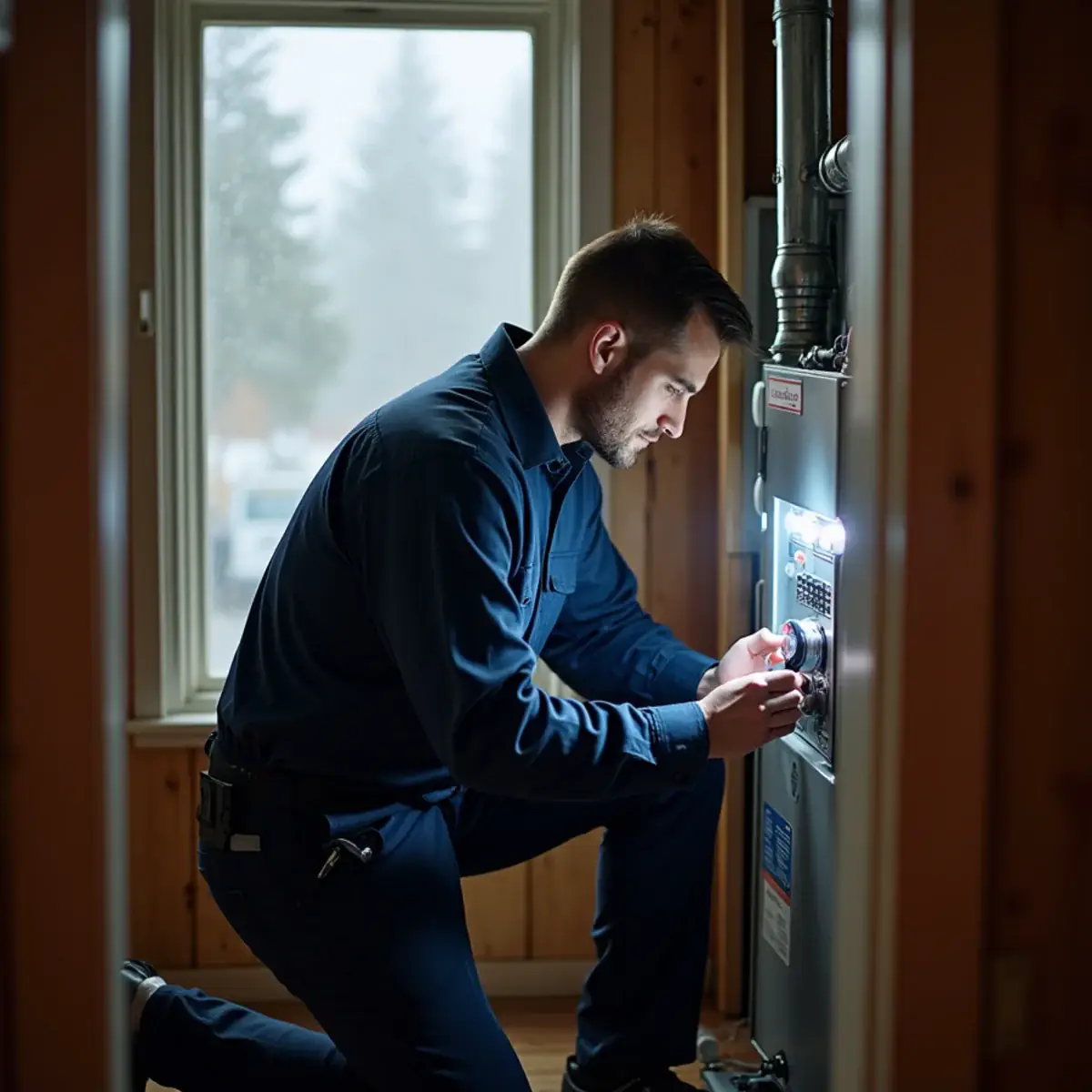
After the repair comes a standing pressure test: the piping is isolated, pressurized and watched on a gauge for any drop over a set period. Only then do pilots get relit, and each appliance gets a combustion and draft check so a repaired furnace or fireplace isn’t sending carbon monoxide into the house instead.
One honest tradeoff comes up on older homes. Replacing only the connector that failed is cheaper today, but if the others are the same vintage uncoated brass, replacing them in the same visit costs less than a second emergency.
- Odorant can fade in new or long-idle steel piping, so a detector reading outranks anyone’s nose.
- A flare connector that has been loosened should be replaced, never re-tightened and reused.
- If the water heater shares the leaking branch, its connector and valve get tested in the same visit as part of water heater service.
- Once cleared, a furnace repair visit handles any tagged valve or pilot assembly, and homes across Mason County on propane get the same pressure test on the tank side.
FAQ
Quick answers
Should I shut off the gas at the meter myself?
Only if you can do it quickly and safely on your way out, and you have the right wrench. Getting everyone out and calling comes first. Once the meter is off, don’t turn it back on yourself. The utility or a qualified technician needs to check for leaks and relight pilots so gas isn’t flowing into an appliance with an open valve.
Is a faint gas smell when my fireplace lights normal?
A brief whiff at the moment of ignition can happen with some older units, but it should disappear within seconds. A smell that lingers, shows up when the fireplace is off, or gets stronger over time is not normal. Treat it as a possible leak, leave, and call the utility before using the fireplace again.
Do I need to be home when the utility comes out?
Someone usually needs to meet the responder and give access to the meter and appliances, but wait outside until they arrive. They’ll check the area, find the source, and make it safe. After that, you’ll need a qualified contractor to repair any leaking appliance or pipe before service is fully restored.
How can I lower the chance of another gas leak?
Have gas appliances inspected before the heating season. A pre-winter visit should look at flexible connectors, threaded fittings, valves, pilot assemblies and venting on the furnace, fireplace and water heater, and flag old uncoated brass connectors for replacement. Keep stored boxes and cans away from appliances and test your CO alarms. If you see rust on gas piping in a damp crawl space, have it evaluated rather than painted over.
Why does my gas fireplace smell when I first turn it on for the season?
The first fires of the season burn off dust, pet hair and cobwebs that settled on the burner and logs, which can smell musty or like hot plastic for a short while. A new insert or new log set can also give off a paint-curing odor during its first hours of use. Neither smells like rotten eggs. If you notice sulfur, or the smell lingers with the fireplace off, leave and call from outside.
The bottom line
A gas smell is never a wait-and-see problem. Leave, call from outside, and let the utility make the house safe. Everything else, from finding the failed connector to relighting the furnace, can happen after that.
Across Kitsap County and into Mason County, we’d much rather make a trip that turns out to be a dry drain trap than hear that someone waited. Once the utility has cleared your home, schedule the repair and a full safety check before the heat goes back on.
Sources & official references
- Cascade Natural Gas: gas leak safety and 24-hour emergency line
- Washington L&I: verify a contractor’s registration, bond and insurance
- Washington L&I: contractor registration requirements
- Kitsap County Department of Community Development: permits for unincorporated addresses
Programs, rules and fees change. Confirm current details with the source before you act.