Short answer
Washington requires water heaters to be strapped for earthquakes: two straps, one in the upper third and one in the lower third of the tank, with the lower strap at least four inches from the controls, anchored into studs or masonry. Gas units also need a sound, rising vent, a correctly piped relief valve and a permitted inspection.
Western Washington sits in earthquake country, and a 50-gallon tank of water weighs well over 400 pounds. That’s why water heater strapping in Washington isn’t optional. A tank that tips in a quake can break its gas line, flood a basement or start a fire, which is exactly what the rules are written to prevent.
Strapping is only one part of a safe installation, though. Relief valve piping, expansion tanks and venting cause just as many problems in the homes we visit around Port Orchard and the rest of Kitsap County. Here’s what correct looks like.
Why water heater strapping in Washington is required
The 2001 Nisqually earthquake knocked over plenty of unstrapped tanks across Puget Sound, and the region still faces the possibility of a much larger Cascadia event. The plumbing code adopted in Washington requires water heaters to be anchored or strapped to resist seismic movement. Local jurisdictions enforce it at inspection, so an unstrapped tank can hold up a permit or a home sale.
What correct strapping looks like
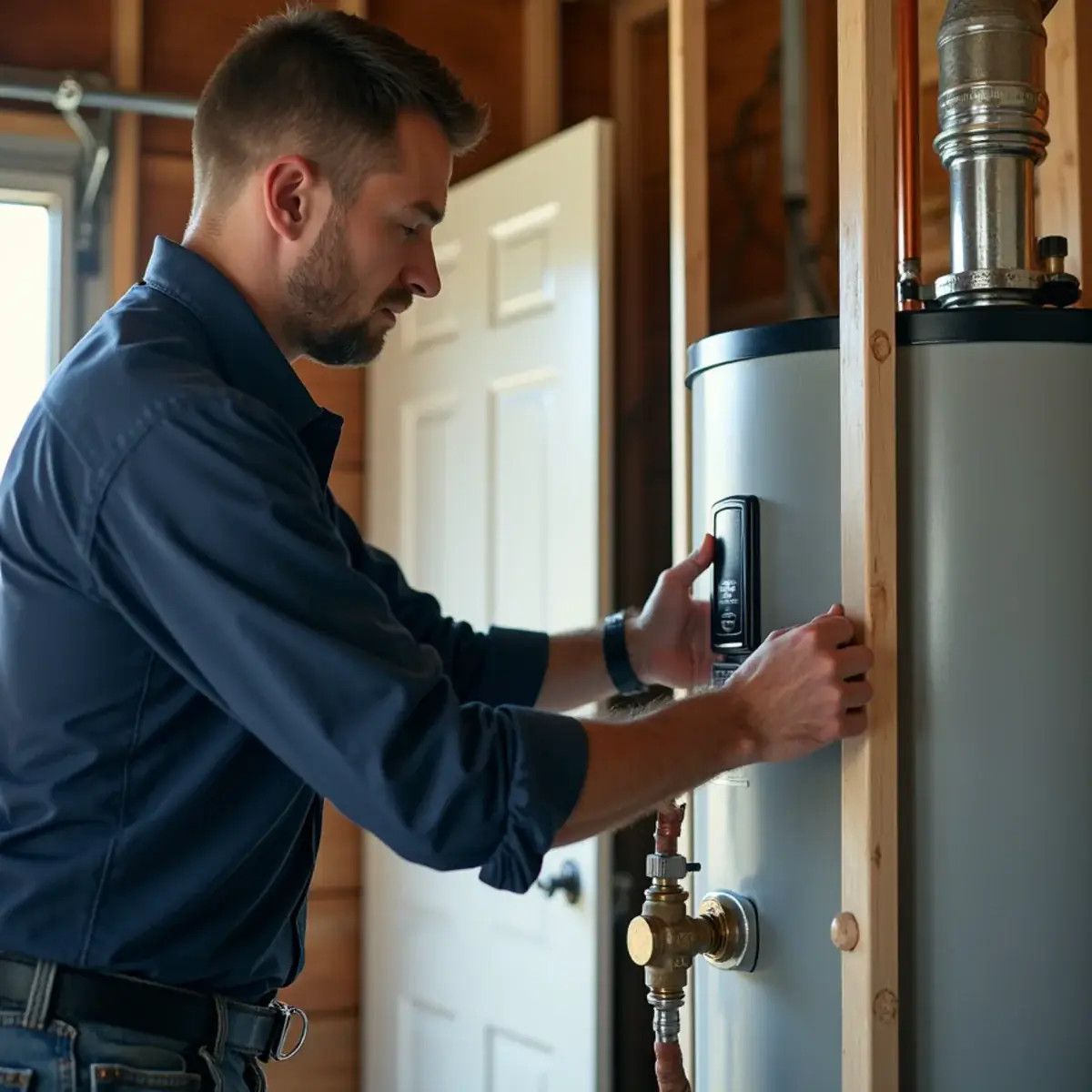
The standard approach is two straps, one in the upper third of the tank and one in the lower third. The lower strap stays clear of the controls, commonly at least four inches above them. Beyond placement, the details matter:
- Straps wrap the tank and anchor into studs or masonry with lag screws or proper anchors, never drywall anchors
- The gap between tank and wall is small, with solid blocking if needed so the tank can’t shift
- Gas and water connections are flexible so they can move a little without breaking
- Tanks on a platform or stand are secured to it, and the stand itself is solid
Venting: the part that can hurt you
Gas water heaters have to vent combustion gases safely outdoors. On an atmospheric unit, that means a draft hood, a vent connector that rises continuously toward the chimney or vent, secure joints and proper clearance to anything combustible. When a vent is loose, sagging or blocked, carbon monoxide can spill into the home.
One common local issue is the orphaned water heater. When an older furnace is replaced with a high-efficiency model that vents out the side wall, the water heater is left alone in a chimney sized for two appliances. It may not draft well, especially on mild days. That often calls for a liner or a different venting strategy. Power-vent units use a fan and plastic pipe, and they need their own clearances and termination rules. A working CO alarm near any gas appliance is non-negotiable. If you ever smell gas near the water heater, leave the house and call 911 or Cascade Natural Gas’s emergency line from outside.
Relief valve discharge and expansion tanks
The temperature and pressure relief valve is the tank’s last line of defense against overheating or overpressure, and its discharge line has to be piped correctly to work.
- Full size of the valve outlet, with no reductions, valves or threaded ends
- Runs downhill by gravity to an approved location, such as a floor drain, indirect waste or outside
- Terminates close to the floor or ground so hot water doesn’t spray anyone
Do you need an expansion tank?
If your home has a pressure-reducing valve or a check valve on the water service, heated water has nowhere to expand. Pressure spikes, and the relief valve drips or fixtures leak. A properly sized thermal expansion tank, with its air charge set to your house pressure and supported so it doesn’t hang on the pipe, solves that.
Permits and inspections
Most Washington jurisdictions require a permit to replace a water heater, and gas work adds its own requirements. Rules and fees vary between the City of Bremerton, Port Orchard and unincorporated Kitsap County, so verify with your local building department before work starts. The inspector typically checks strapping, venting, relief valve piping, gas connections and combustion air.
Our water heater service covers installation, repair and bringing existing tanks up to code. If the new heater needs a new gas run or a relocated shutoff, that falls under our gas piping and gas line installation work.
Before you sign, check the installer’s Washington L&I registration. Registered contractors carry a $15,000 bond and liability insurance, and the business name on the registration should match the quote and the payment recipient. Snap a photo of the old tank’s data plate, straps and vent before removal so you have a record of what was there. If a furnace installation is also on your list, plan both together, since a new sidewall-vented furnace changes how the water heater drafts.
From the field
From the field: failed strapping and venting we find on existing tanks
Washington’s seismic rule lives in the state amendments to the plumbing code, WAC 51-56, and local jurisdictions commonly look for heavy sheet-metal straps, often specified as 20-gauge. What we actually find on older tanks is rarely that. The usual suspects are below, and each one would fail a careful inspection.
Venting gets a real test, not a glance. With the burner running for a few minutes, doors closed and the bath fans and range hood on, we check at the draft hood for spillage. A heater that drafts fine on a cold morning can spill on a mild afternoon with exhaust fans running, which is exactly when nobody is watching. If there is any doubt about gas, our page on what to do when you smell gas near a gas appliance comes first.
Garages add two more checks: whether the burner sits high enough off the floor or the unit is listed as flammable vapor ignition resistant, and whether a car could reach it. When the furnace in the same space is aging, our guide on whether to repair or replace a furnace helps plan both jobs together, and a yearly HVAC maintenance visit can include a look at the tank’s vent.
- A single wrap of perforated plumber’s tape instead of two real straps
- Straps fastened into drywall or a single stud edge rather than solid framing
- The lower strap pressed against the gas control
- Rigid gas or water connections that would snap if the tank shifted
FAQ
Quick answers
How many straps does a water heater need in Washington?
The typical requirement is two straps: one within the upper third of the tank and one within the lower third, with the lower strap kept clear of the controls. Each strap should anchor into studs or masonry. Your local building department has the final say, so confirm the exact requirement before installation or inspection.
Do I need a permit to replace my water heater?
In most Washington jurisdictions, yes. A permit lets an inspector verify strapping, venting, relief valve piping and gas connections. Requirements and fees vary between cities and the county, so check with your local building department. A contractor who pulls permits routinely should handle this as part of the job.
Why does my water heater relief valve keep dripping?
Common causes are high water pressure, thermal expansion in a closed system without an expansion tank, or a worn valve. Don’t cap or plug the discharge line, because that disables a critical safety device. Have the house pressure checked and the valve tested, and add or recharge an expansion tank if needed.
What should a water heater replacement quote include?
Look for the tank model and capacity, removal and disposal of the old unit, new seismic straps, relief valve discharge piping, an expansion tank if your system needs one, venting work, gas or electrical connections, the permit and the inspection. Ask what is excluded, such as a chimney liner. Comparing quotes line by line is the only fair way to compare prices.
Should I check the water heater when my furnace is replaced?
Yes, if both share a chimney. A new high-efficiency furnace that vents through the side wall can leave the gas water heater alone in a flue sized for two appliances, and it may draft poorly. Have the venting evaluated as part of the furnace replacement scope so a liner or other fix is priced up front.
The bottom line
A water heater that’s strapped, vented and piped correctly is one of the quietest safety improvements you can make. Take a look at yours: two straps, a solid vent, a relief line running down to the floor. If anything seems off, it’s worth fixing before the next shake.
We’re happy to inspect your water heater setup, bring it up to code, or handle a replacement with the permit and inspection done right.
Sources & official references
- Washington L&I: contractor registration, bond and insurance
- Washington L&I: verify a contractor’s registration
- City of Bremerton: building permits
- Kitsap County Department of Community Development: permits
Programs, rules and fees change. Confirm current details with the source before you act.