Short answer
Many homes can get by without air conditioning in Kitsap County, but it’s worth it for two-story houses with hot upstairs bedrooms, tight newer builds and anyone with health risks. Heat waves now overlap with wildfire smoke, and when windows must stay shut, a heat pump or AC with MERV 13 filtration keeps the house cool and cleaner.
For decades the honest answer was no. Air conditioning in Kitsap County was a nice-to-have: a few warm weeks, cool nights, open the windows and wait it out. Two things changed that math for a lot of households, and neither one is going away.
The first was the June 2021 heat dome, when temperatures across Puget Sound climbed past 100°F and upstairs bedrooms stayed in the 90s overnight. The second is wildfire smoke, which now shows up most late summers and turns open windows into a bad idea. Below is how we’d think it through for a house anywhere from Port Orchard to Silverdale.
What changed: heat domes and smoke season
Heat waves here are short but sharp, and our housing wasn’t built for them. Many homes have no cooling at all, lots of west-facing glass and attic insulation that holds heat into the night. After the 2021 event, we saw a wave of calls from people who had never considered AC and didn’t want to go through that again.
Smoke is the quieter problem. During a heavy smoke week the usual trick of cooling the house with night air stops working, because opening windows pulls smoke inside. The home heats up with the windows shut, and without mechanical cooling there’s nowhere for that heat to go.
Who benefits most from air conditioning in Kitsap County
Not every house needs it. A shaded single-story rambler near the water may stay comfortable with fans. These are the situations where we think cooling earns its keep:
- Two-story homes where upstairs bedrooms stay above 80°F at night
- Newer, tighter homes around Silverdale and McCormick Woods that hold heat once it gets in
- Anyone with asthma, COPD, heart conditions, a new baby or an older relative living at home
- People who work from home and can’t escape the afternoon heat
- Homes with large west- or south-facing windows and little shade
Filtration matters as much as cooling
Once the windows are shut for smoke, your HVAC system becomes the air cleaner for the whole house. A MERV 13 filter captures a large share of the fine particles in wildfire smoke, but only if the system can move air through it. Squeezing a thick-rated one-inch filter into a slot built for cheap fiberglass can choke airflow and strain the blower.
Where the return allows, we like a four- or five-inch media filter cabinet sized for the blower. It holds more surface area, keeps static pressure reasonable and lasts longer between changes. Run the fan continuously during smoke events and replace the filter once the smoke clears, because a loaded filter restricts airflow fast. A portable HEPA unit in the main bedroom is a smart supplement.
Central AC, heat pump or ductless?
The right system depends mostly on what you already have.
If you have a gas furnace and ducts
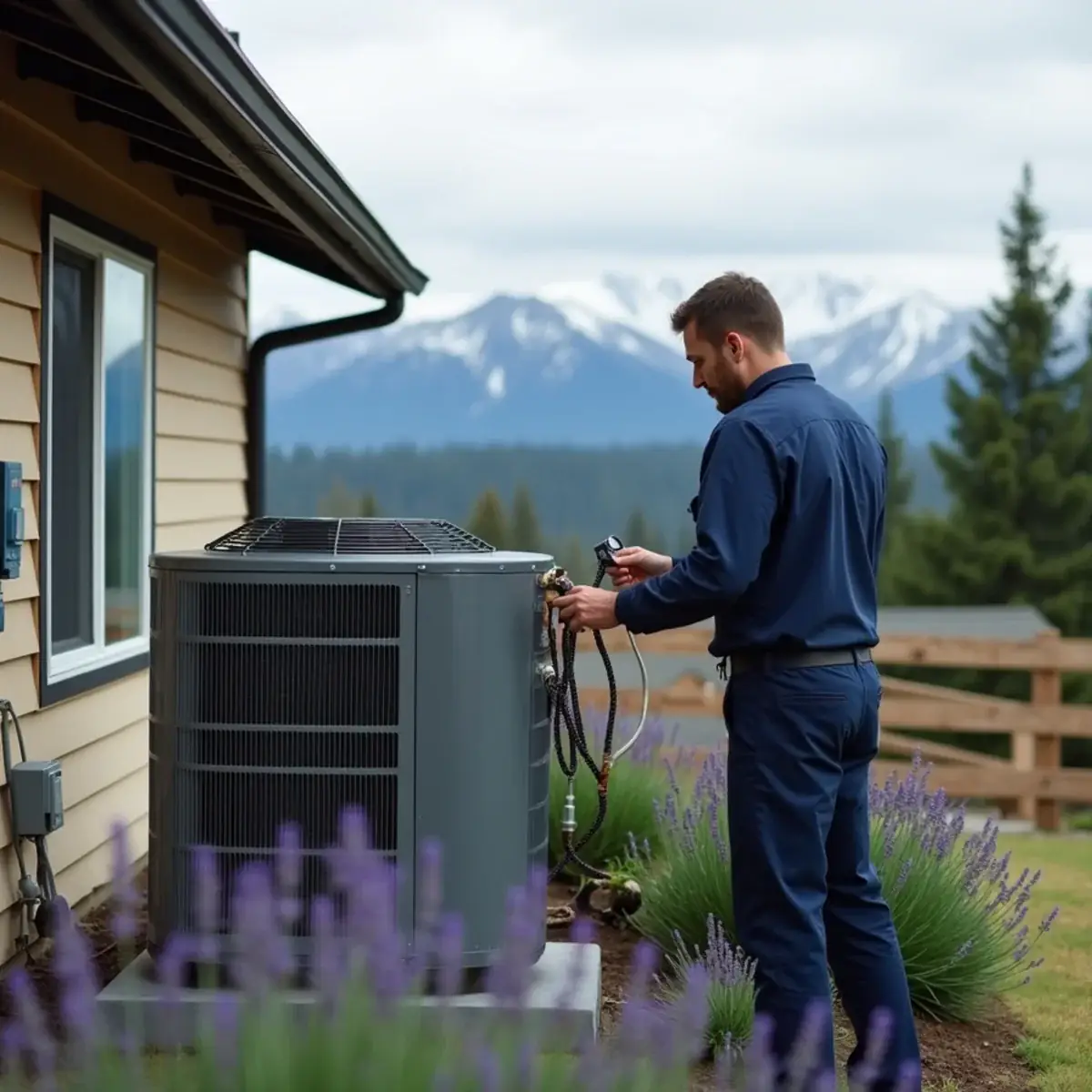
You can add a central air conditioner with a coil on top of the furnace, or install a heat pump that cools in summer and shares heating with the furnace in winter. Since a heat pump is essentially an air conditioner that also runs in reverse, the price gap is often smaller than people expect. Regional planning ranges run about $6,500–$10,500 for central AC and $9,500–$13,500 for a standard heat pump; a site visit sets the real number. Our air conditioner installation and heat pump installation pages go deeper on both routes.
If you have no ducts
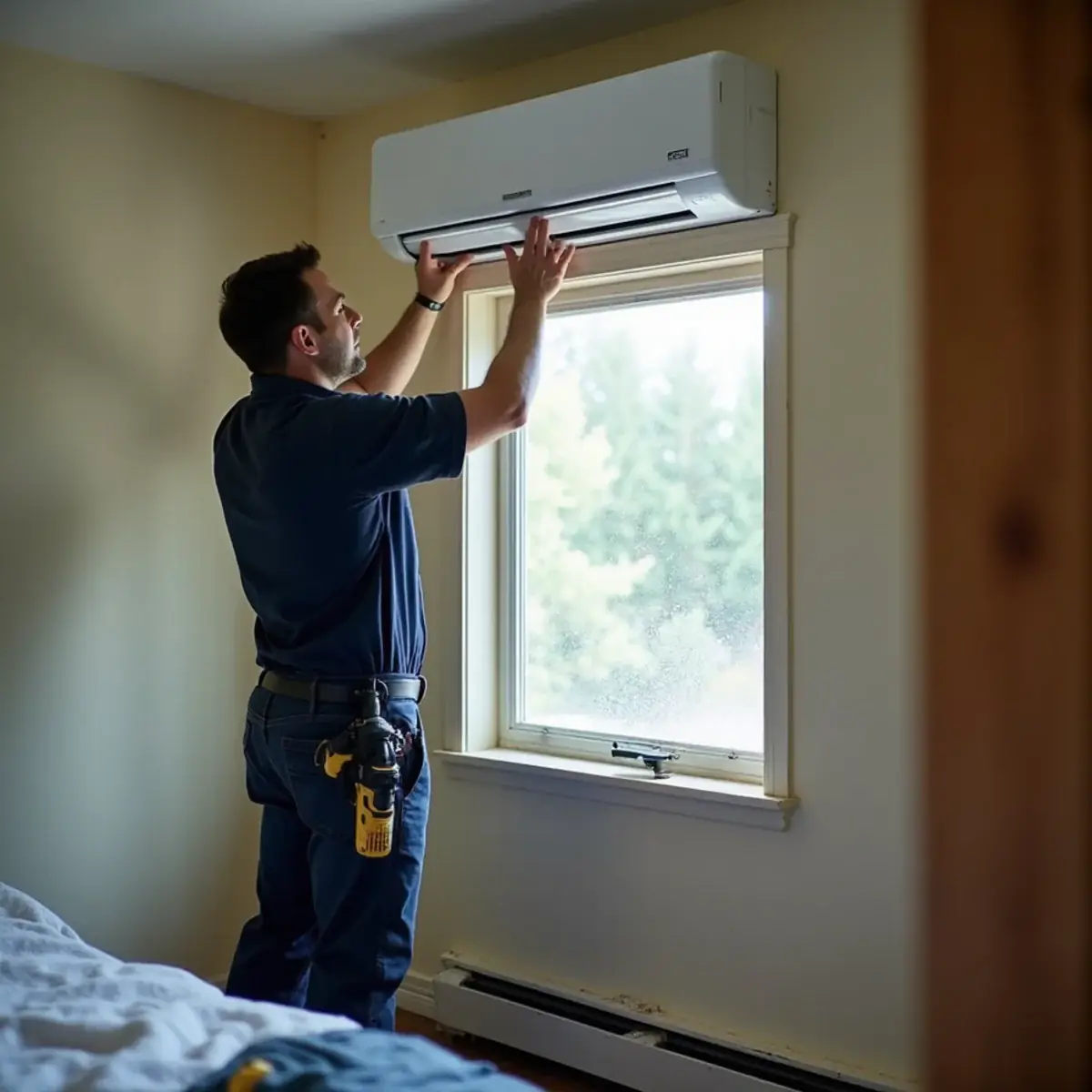
Baseboard and wall-heater homes are usually best served by ductless. One head upstairs often handles the bedrooms that suffer most, and you gain efficient heat for winter at the same time.
Before comparing equipment, confirm the house can carry it. The outdoor unit needs its own 240V circuit, so we check panel space and service capacity first; regional planning ranges for a panel upgrade run about $1,200–$3,000 when one is truly needed. On a furnace home, the new coil has to match the furnace blower and get a condensate drain that doesn’t empty into the crawl space. For bedroom-only cooling in a baseboard house, our ductless mini-split installation page covers that route in more detail.
Size it for our climate, and book early
Oversizing is the most common mistake we see. A unit sized for Sacramento will cool a Kitsap house in minutes, shut off, and leave it clammy. A Manual J load calculation based on local design temperatures keeps run times long enough to control humidity.
Timing matters too. Once the first 90-degree forecast hits, every contractor in the county is booked. Planning in April or May gives you time to compare options, pull permits and have the system running before July. Across Kitsap County, spring installs are simply easier to schedule.
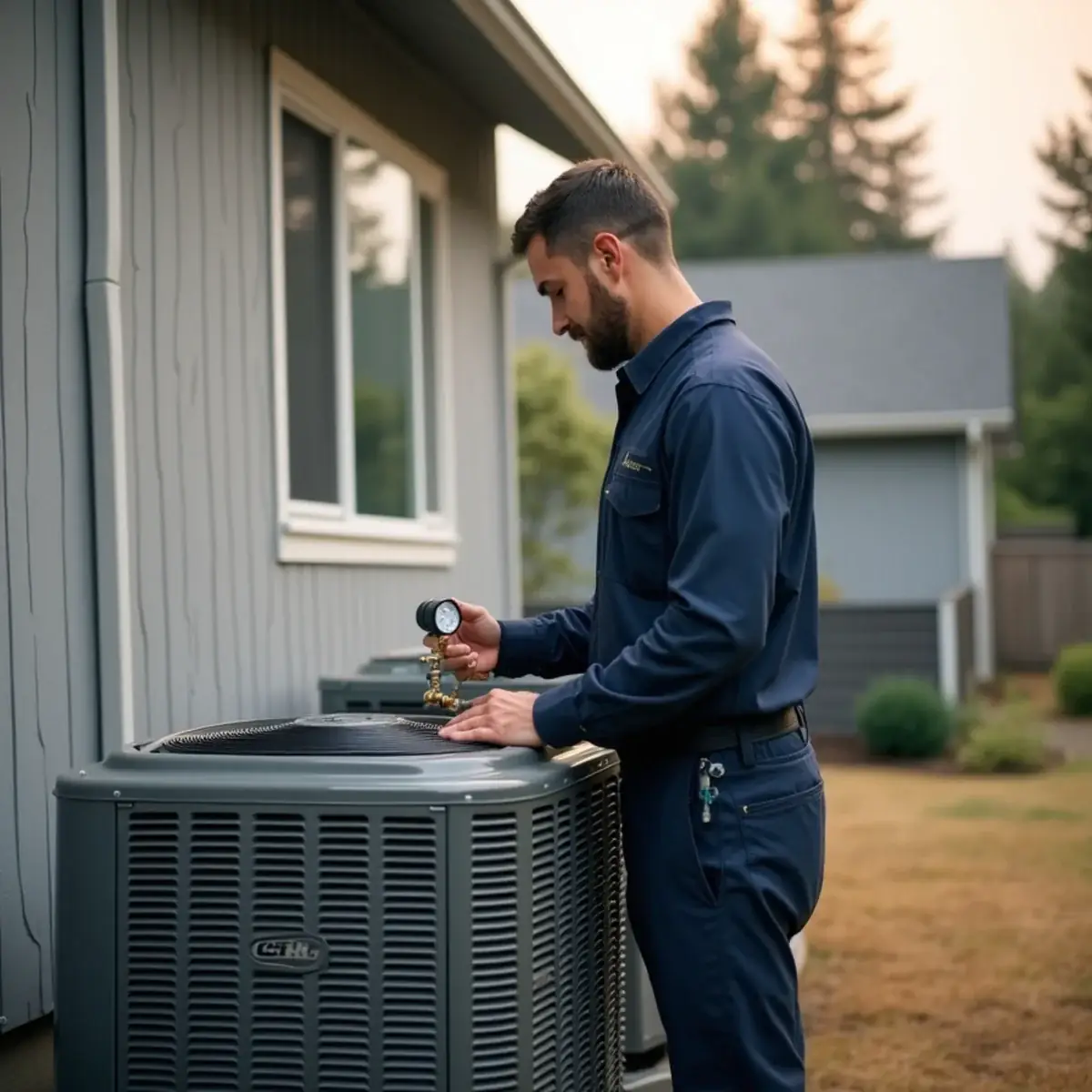
If you already have cooling, give it a pre-summer check in spring as well. A coil matted with cottonwood fluff or fir needles, a slow condensate drain or a weak capacitor tends to announce itself on the first hot afternoon, when every service line is busy. Our HVAC maintenance visits look at the outdoor coil, drain, airflow and thermostat before the heat arrives.
From the field
Getting a cooling system ready for a smoke week
Running AC during smoke is the right move, but only if the house isn’t pulling outside air in somewhere else. Before smoke season we look for the hidden intakes: a fresh-air duct tied into the furnace return, an ERV or HRV running on a timer, and a filter rack with a gap where air slips past the filter entirely. A MERV 13 filter does nothing for smoke that flows around it, so closing that damper and sealing the rack are cheap fixes that make filtration real.
We also measure static pressure with the new filter in place and check the temperature drop across the indoor coil. A healthy split tells us the blower is moving enough air through the denser media; a split that is too wide often means the blower is starving, which can ice the coil on a long hot afternoon.
One honest tradeoff: in Kitsap the heating load usually outweighs the cooling load, so a heat pump sized for January can be bigger than July needs. A variable-speed inverter handles that by slowing down, while a single-stage unit simply short-cycles. If you’re adding a coil to a furnace home, our furnace installation page explains how blower and coil get matched, and waterfront owners should read how salt air affects outdoor units before choosing a pad spot.
- Fresh-air ducts, ERV or HRV timers and bath fan habits
- Gaps around the filter rack and door
- Static pressure and coil split with MERV 13 installed
FAQ
Quick answers
Is a portable air conditioner good enough for Kitsap summers?
For one room during a short heat wave, a portable unit can help. They are loud, less efficient and usually pull outside air in through gaps, which works against you during smoke events. If you’re buying one every summer or suffering through multi-day heat, a ductless head or central system is the more reliable long-term answer.
Will a heat pump cool as well as a central air conditioner?
Yes. In cooling mode a heat pump works the same way as an air conditioner, and similarly sized equipment delivers similar cooling. The difference is that a heat pump also heats efficiently in winter, which is why many Kitsap homeowners choose one instead of adding a cooling-only system to an older furnace.
What filter should I use during wildfire smoke?
A MERV 13 filter is a good target if your system can handle the airflow. Deeper media filters work best because they add surface area without choking the blower. Run the fan continuously during smoke events, check the filter afterward, and replace it once it looks gray or loaded.
Does adding air conditioning need a permit in Kitsap County?
Typically, yes. New cooling equipment is mechanical work, and a new outdoor circuit usually needs an electrical permit too. Inside Bremerton city limits the city issues permits, while homes in unincorporated areas such as Silverdale generally go through Kitsap County’s Department of Community Development. The technician connecting refrigerant lines must hold EPA Section 608 certification, and you can check a contractor’s Washington L&I registration online before signing.
Can a rebate help pay for a heat pump that adds cooling?
Possibly. PSE electric customers have had heat pump rebate paths, especially for homes moving off electric resistance heat, and income-qualified options have existed as well. Programs, qualifying models and income rules change, so confirm eligibility before you pick equipment or sign. Treat any incentive as separate from the installed price when comparing quotes, and if you finance, compare APR, term and fees.
The bottom line
You don’t need AC to survive a Kitsap summer, but more households are deciding they want it, especially for sleep and for smoke weeks. The best system is the one sized for your house and paired with filtration that actually moves air.
If you’re weighing options before the next heat wave, we’re happy to walk your home, look at your ducts or wall space, and give you an honest recommendation.
Sources & official references
- AirNow: current air quality and wildfire smoke conditions
- ENERGY STAR: efficient air conditioners and heat pumps
- ACCA: Manual J, D and S standards for load calculation and equipment selection
- Kitsap County Department of Community Development: permits for unincorporated areas
Programs, rules and fees change. Confirm current details with the source before you act.